A series RC-current is connected to AC voltage source. Consider two cases : (A) When C is without a dielectric medium and (B) when C is filled with dielectric of constant 4. The current IR through the resistor and voltage VC across the capacitor are compared in the two cases. Which of the following is/are true?
IIT-JEE 2011 Paper 2 Offline Physics Questions
JEE Advanced · 10 Apr 2011 · Answers and step-by-step solutions
Paper PDF and print
PDF and print include all subjects in this paper.
Showing 20 of 20 Physics questions · Page 1 of 1
A series RC combination is connected to an AC voltage of angular frequency
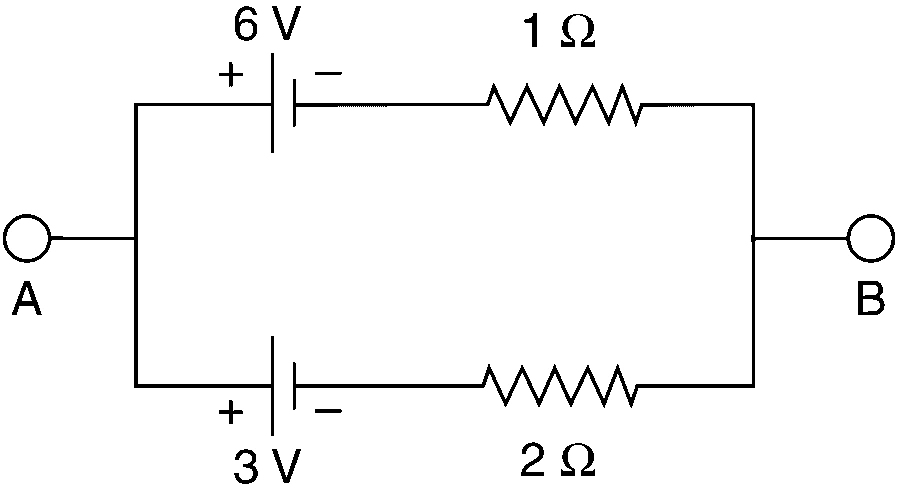
Two batteries of different emfs and different internal resistance are connected as shown. The voltage across AB in volts is __________.

A silver sphere of radius 1 cm and work function 4.7 eV is suspended from an insulating thread in free-space. It is under continuous illumination of 200 nm wavelength light. As photoelectrons are emitted, the sphere gets charged and acquires a potential. The maximum number of photoelectrons emitted from the spheres is A
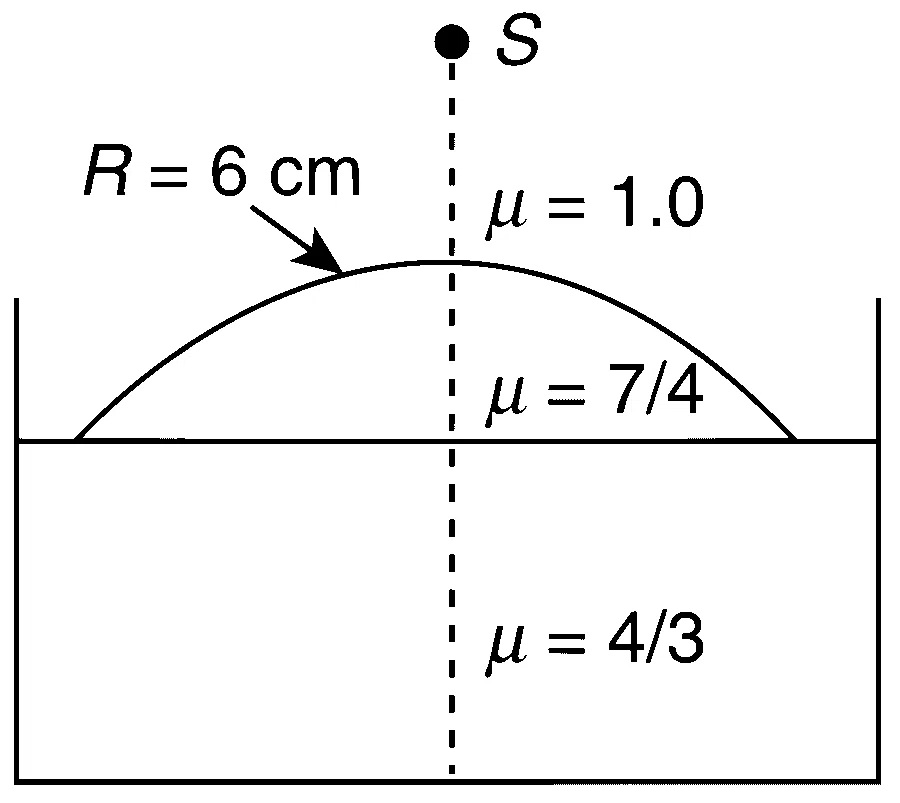
Water (with refractive index = 4/3) in a tank is 18 cm deep. Oil of refractive index 7/4 lies on water making a convex surface of radius of curvature R = 6 cm as shown. Consider oil to act a thin lens. An object S is placed 24 cm above water surface. The location of its image is at x cm above the bottom of the tank. Then x is __________.

ejected from the satellite such that it just escapes from the gravitational pull of the earth. At the time of its
ejection, the kinetic energy of the object is
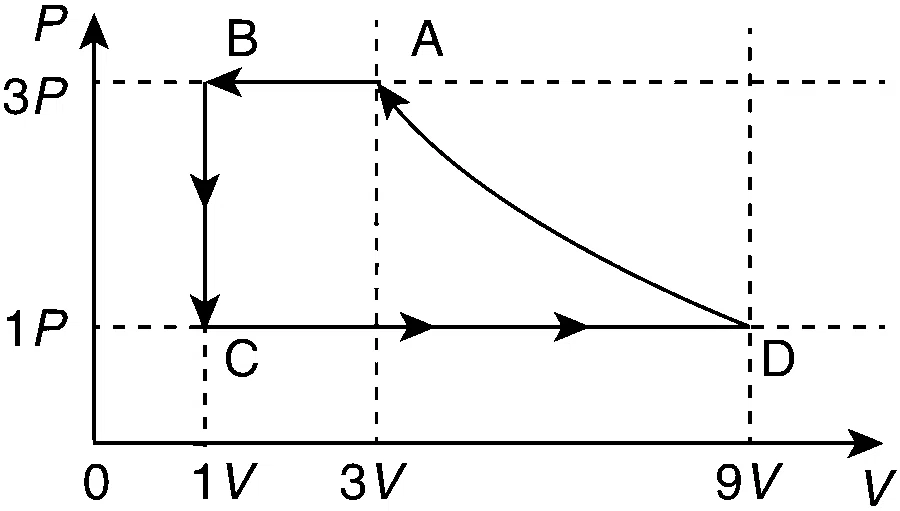
One mole of a monatomic gas is taken through a cycle ABCDA as shown in the PV diagram. Column II give the characteristics involved in the cycle. Match them with each of the processes given in Column I.

| Column I | Column II | ||
|---|---|---|---|
| (A) | Process A | (P) | Internal energy decreases. |
| (B) | Process B | (Q) | Internal energy increase. |
| (C) | Process C | (R) | Heat is lost. |
| (D) | Process D | (S) | Heat is gained. |
| (T) | Work is done on the gas. |
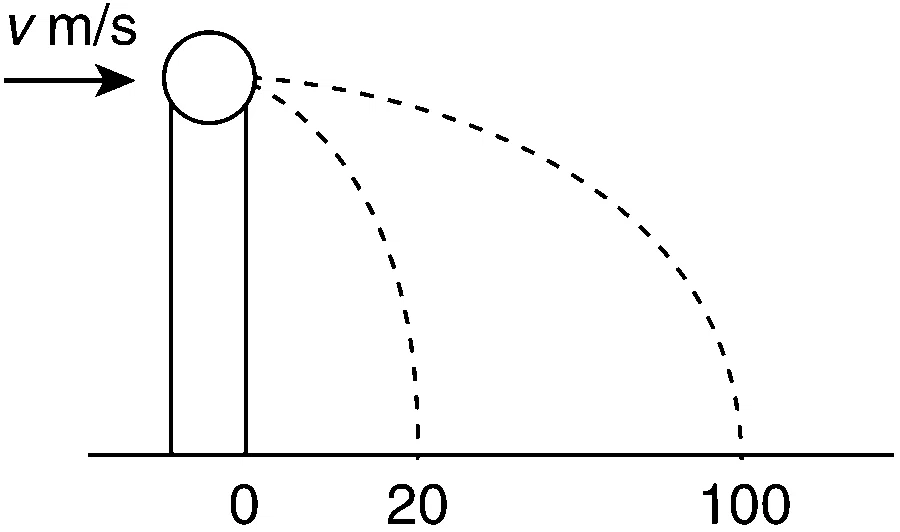
A ball of mass 0.2 kg rests on a vertical post of height 5 m. A bullet
of mass 0.01 kg, traveling with a velocity V m/s in a horizontal
direction, hits the center of the ball. After the collision, the ball and
bullet travel independently. The ball hits the ground at a distance of
20 m and the bullet at a distance of 100 m from the foot of the post.
The velocity V of the bullet is

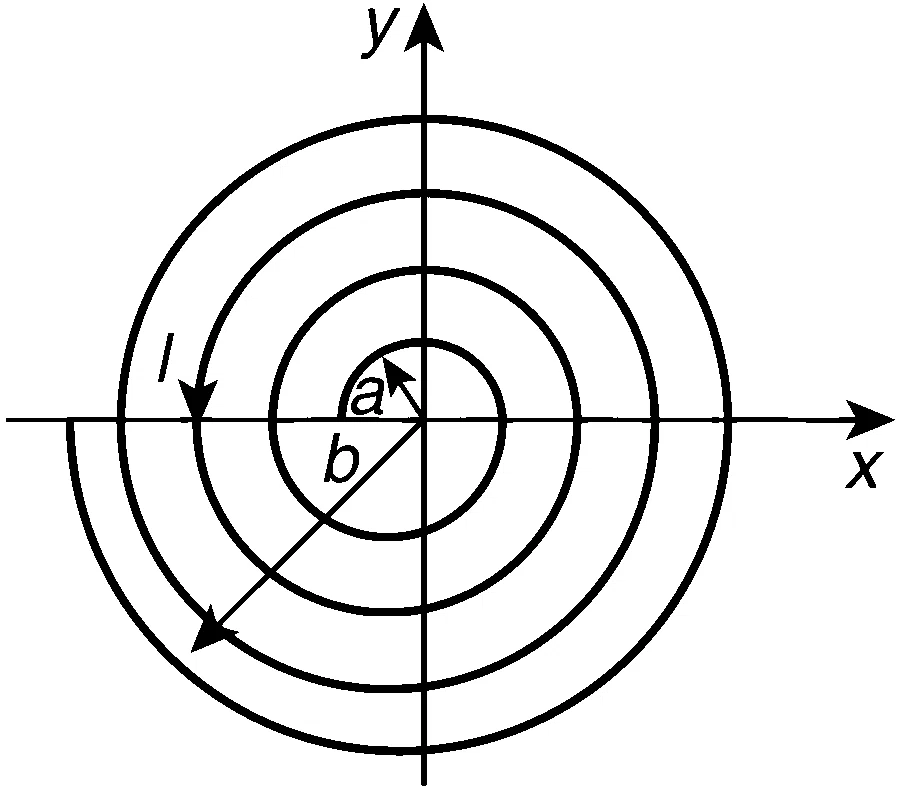
A long insulated copper wire is closely wound as a spiral of N turns. The spiral has inner radius a and outer radius b. The spiral lies in the xy-plane and a steady current I flows through the wire. The z-component of the magnetic field at the centre of the spiral is

ball forward with a speed of 10 m/s, at an angle of
1.15 m inside the train to catch the ball back at the initial height. The acceleration of the train, in m/s2, is
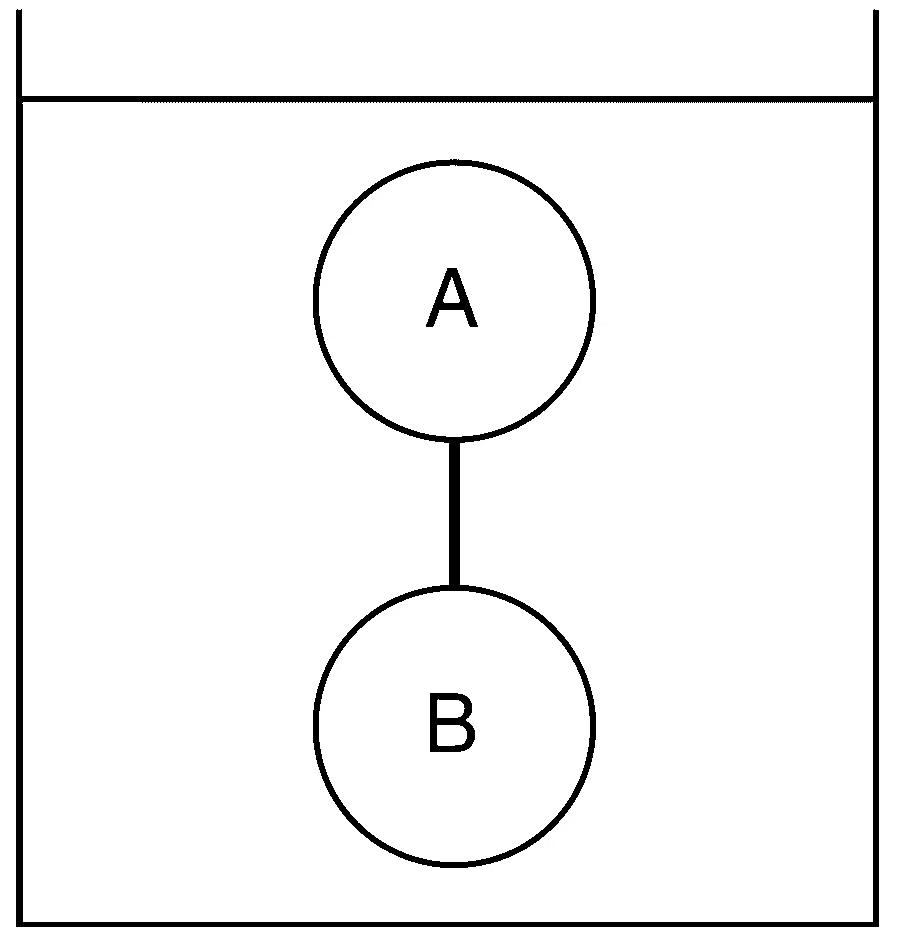
Two solid spheres A and B of equal volumes but of different densities dA and dB are connected by a string. They are fully immersed in a fluid of density dF. They get arranged into an equilibrium state as shown in the figure with a tension in the string. The arrangement is possible only if

a screw gauge, whose pitch is 0.5 mm and there are 50 divisions on the circular scale. The reading on the
main scale is 2.5 mm and that on the circular scale is 20 divisions. If the measured mass of the ball has a
relative error of 2 %, the relative percentage error in the density is
A light ray travelling in glass medium is incident on glass-air interface at an angle of incidence
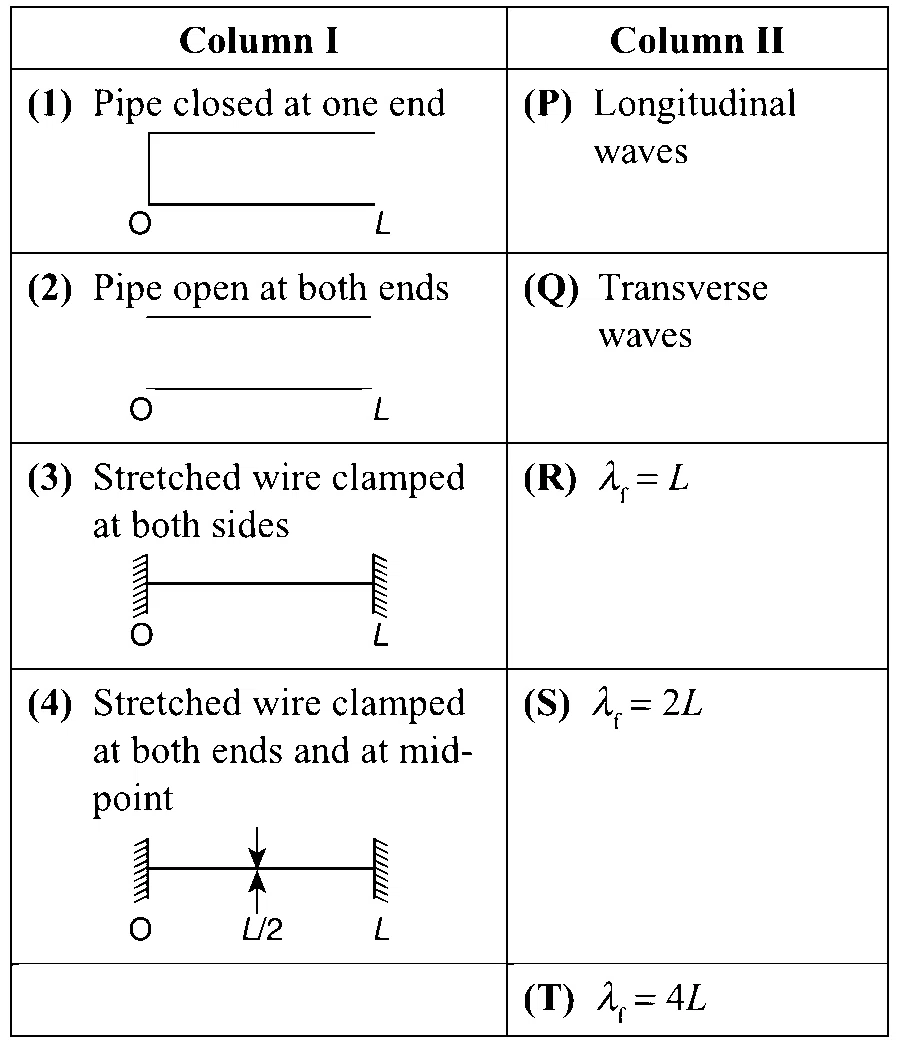
Column I shows four systems, each of the same length L, for producing standing waves. The lowest possible natural frequency of a system is called its fundamental frequency, whose wavelength is denoted as

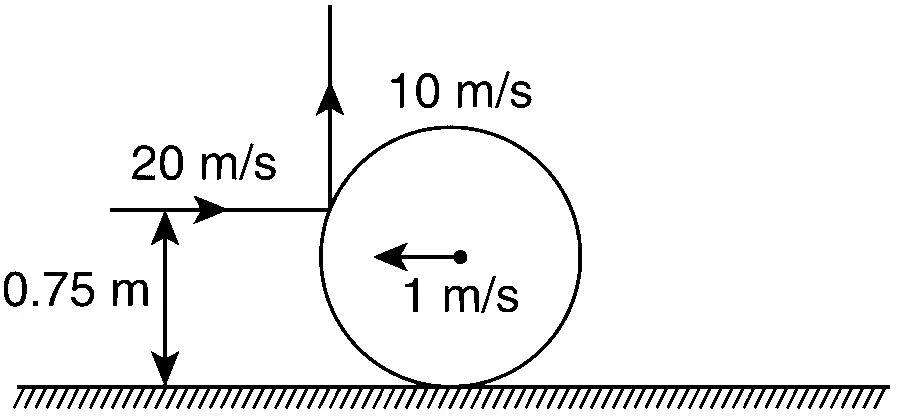
A thin ring of mass 2 kg and radius 0.5 m is rolling without on a horizontal plane with velocity 1 m/s. A small ball of mass 0.1 kg, moving with velocity 20 m/s in the opposite direction hits the ring at a height of 0.75 m and goes vertically up with velocity 10 m/s. Immediately after the collision,

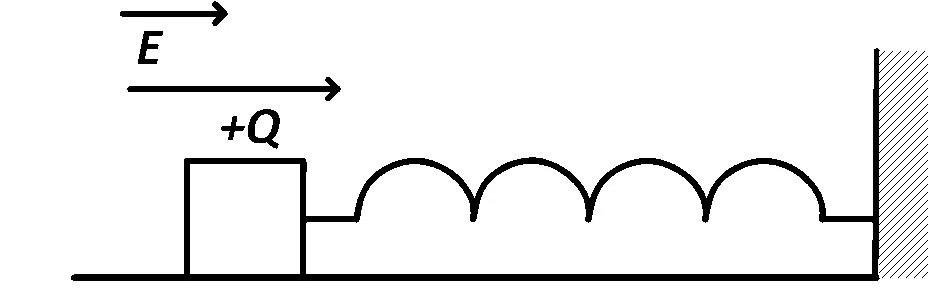
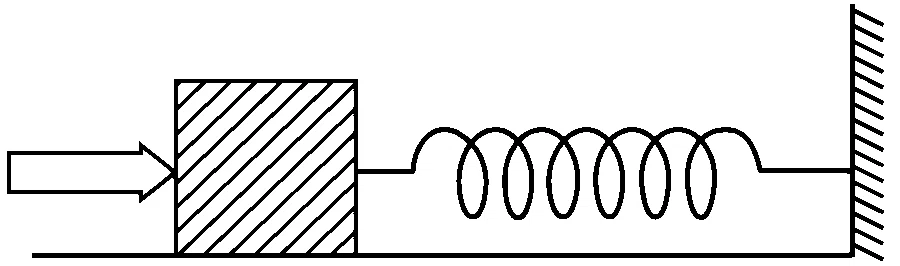
A block of mass 0.18 kg is attached to a spring of force-constant 2 N/m. The
coefficient of friction between the block and the floor is 0.1. Initially the
block is at rest and the spring is un-stretched. An impulse is given to the
block as shown in the figure. The block slides a distance of 0.06 m and
comes to rest for the first time. The initial velocity of the block in m/s is
V = N/10. Then N is