51JEE Main 2024 (Online) 9th April Morning Shift
MCQ+4 / -12024Chemistry
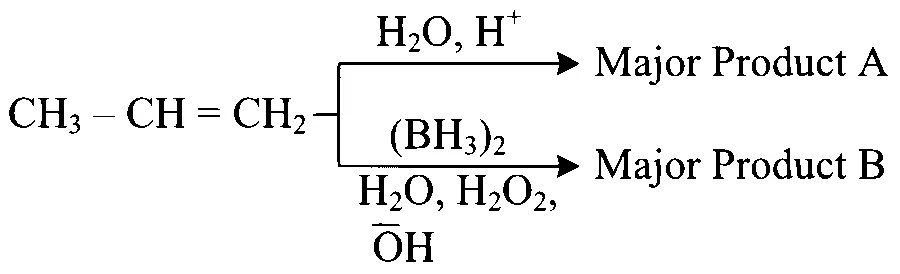
Identify the product A and product B in the following set of reactions.

JEE Main · 9 Apr 2024 · Answers and step-by-step solutions
Showing 25 of 90 questions · Page 3 of 4
Identify the product A and product B in the following set of reactions.
On reaction of Lead Sulphide with dilute nitric acid which of the following is not formed?
Given below are two statements : one is labelled as Assertion (A) and the other is labelled as Reason (R).
Assertion (A) : Both rhombic and monoclinic sulphur exist as
Reason (R) : Oxygen forms
In the light of the above statements, choose the most appropriate answer from the options given below :
Given below are two statements :
Statement (I) : The oxidation state of an element in a particular compound is the charge acquired by its atom on the basis of electron gain enthalpy consideration from other atoms in the molecule.
Statement (II) :
In the light of the above statements, choose the most appropriate answer from the options given below :
Identify the incorrect statements regarding primary standard of titrimetric analysis.
(A) It should be purely available in dry form.
(B) It should not undergo chemical change in air.
(C) It should be hygroscopic and should react with another chemical instantaneously and stoichiometrically.
(D) It should be readily soluble in water.
(E)
Choose the correct answer from the options given below :
[SPM : Semi Permeable Membrane]
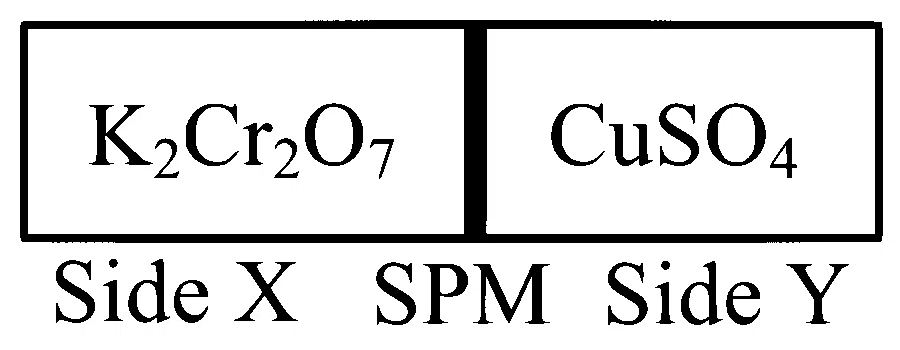
Due to osmosis :
Molarity
Compare the energies of following sets of quantum numbers for multielectron system.
(A)
(B)
(C)
(D)
(E)
Choose the correct answer from the options given below :
The heat of solution of anhydrous
The heat of hydration of
When equal volume of
Let the line
The shortest distance between the lines
Let the set of all positive values of
The parabola
The coefficient of
The remainder when
Let a circle passing through
Let the centre of a circle, passing through the points
The sum of the square of the modulus of the elements in the set
Let
The solution of the differential equation
The solution curve, of the differential equation
Let
Let
If the domain of the function