1BITSAT 2021
MCQ+3 / -12021Physics
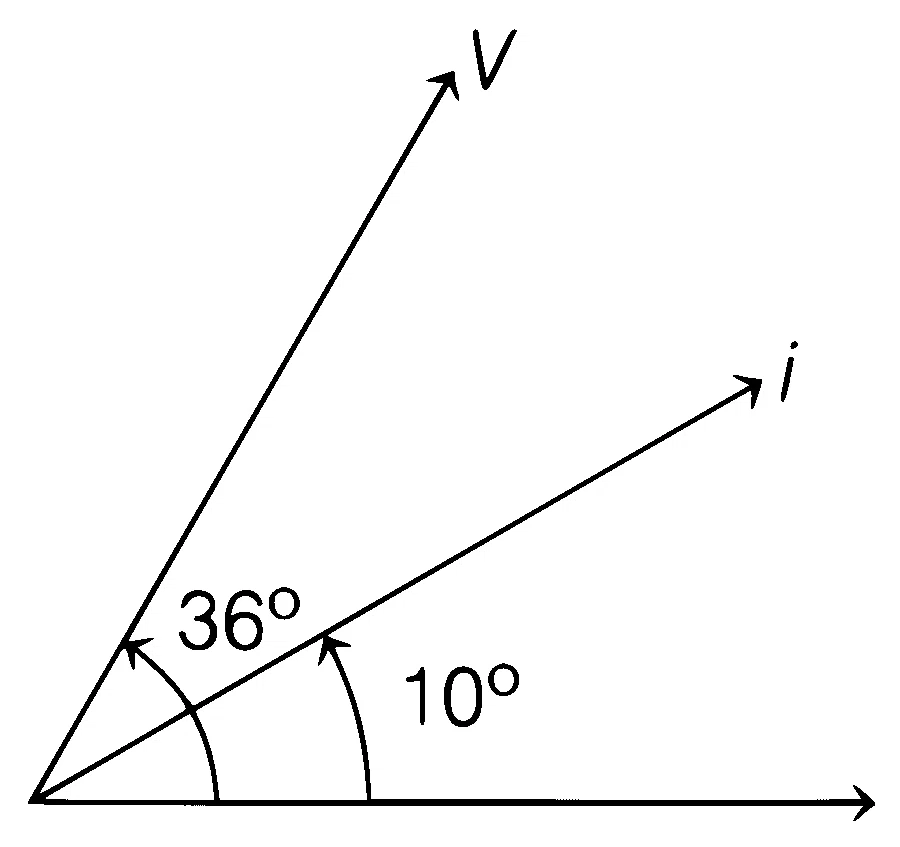
The phasor diagram of a load represents which circuit?

Showing 25 of 135 questions · Page 1 of 6
The phasor diagram of a load represents which circuit?
A proton has kinetic energy E = 100 eV which is equal to that of a photon. The wavelength of photon is
The radius of a muonic hydrogen atom is 2.5
A radioactive sample at any instant has its disintegration rate 5000 disintegrations per min. After 5 min, the rate is 1250 disintegrations per min. Then, the disintegration constant (per min) is
The separation between two parallel plates of capacitor is 1 mm. What is the electric potential generates between the plates of capacitor, when electric field of 2000 N/C is applied on it?
A cyclist speeding at 6 m/s in a circle of 18 m radius makes an angle
A shunt is connected in parallel with a galvanometer. Why?
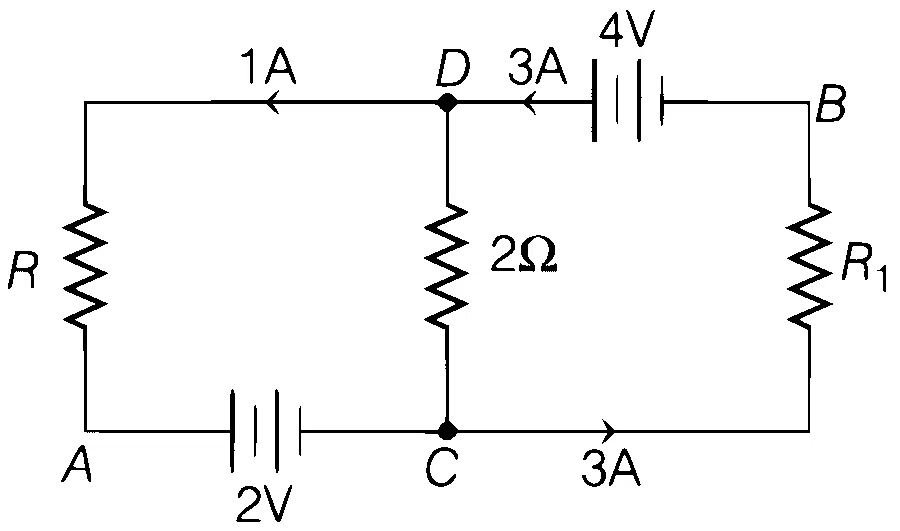
In the following circuit, assuming point A to be at zero potential, then what is the potential at point B?
The potential difference applied to an X-ray tube is decreased. As a result, in the emitted radiation,
For a constant hydraulic stress on an object, the fractional change in the object's volume
Two coils A and B have a mutual inductance 0.001 H. The current changes in the first coil according to the equation
Choose the correct statement.
Four charges equal to + Q are placed at the four corners of a square and a charge (
An electric dipole is placed at an angle of 30
Two drops of equal radius (R) coalesce to form a bigger drop. What is the ratio of surface energy of bigger drop to smaller one?
From a solid sphere of mass M and radius R, a spherical portion of radius
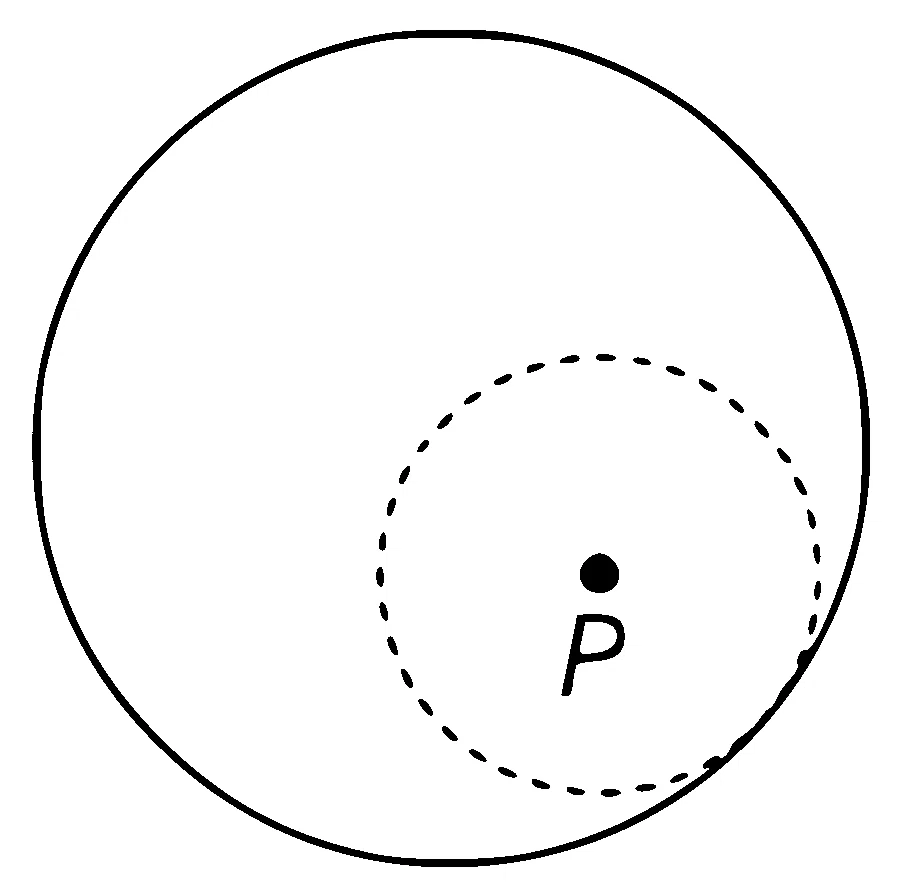
Taking gravitational potential V = 0 at r =
If the earth stops rotating about its axis, then what will be the change in the value of g at a place in the equatorial plane? (Radius of earth = 6400 km)
An ideal monoatomic gas is taken round the cycle ABCDA as shown in the p-diagram
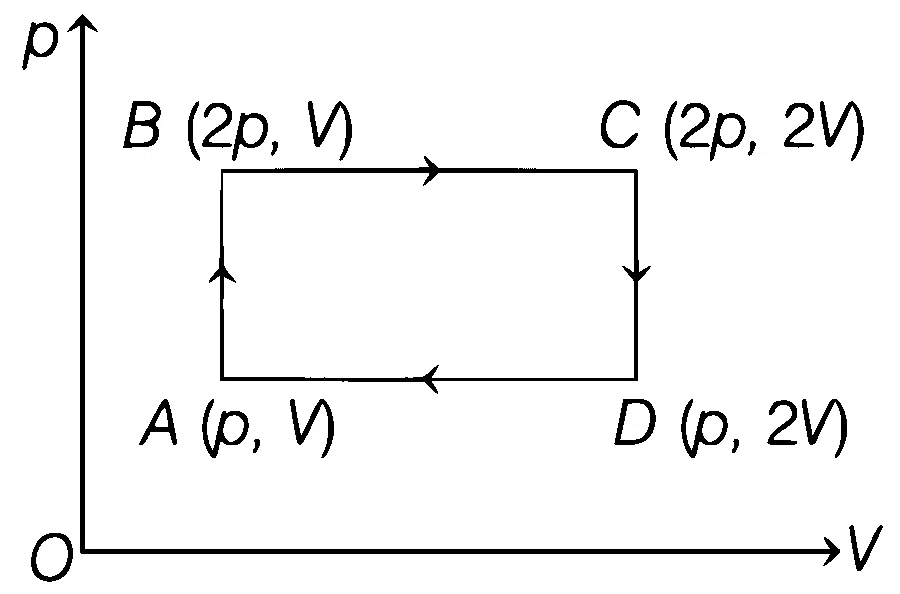
The work done during the cycle is
Which of the following graphs show the correct relation between conductivity and temperature for a metallic conductor?
The ratio of the specific heats
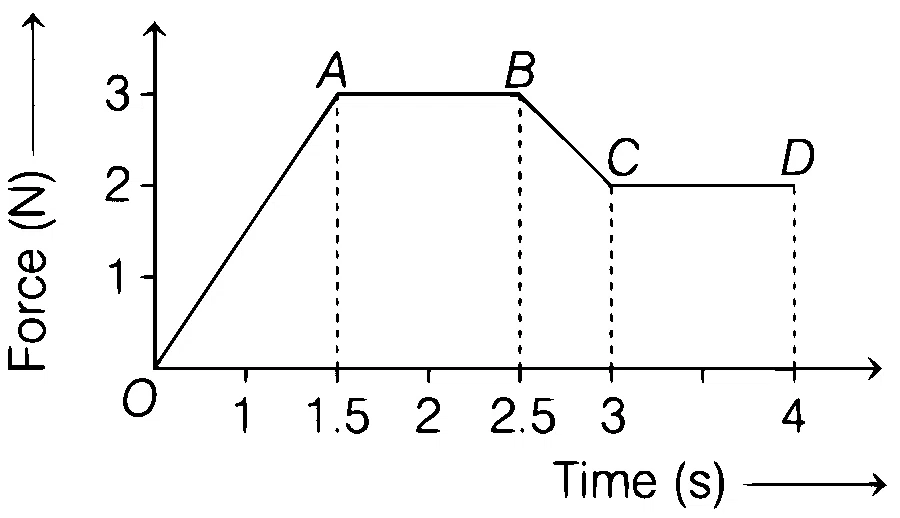
The initial speed of a body of mass 2.0 kg is 5 m/s. A force acts for 4 s in the direction of motion of the body, as shown in force-time graph. The impulse of force is
A uniform rod AB of length L = 1 m is sliding along two mutually perpendicular surfaces OP and OQ as shown in the figure.
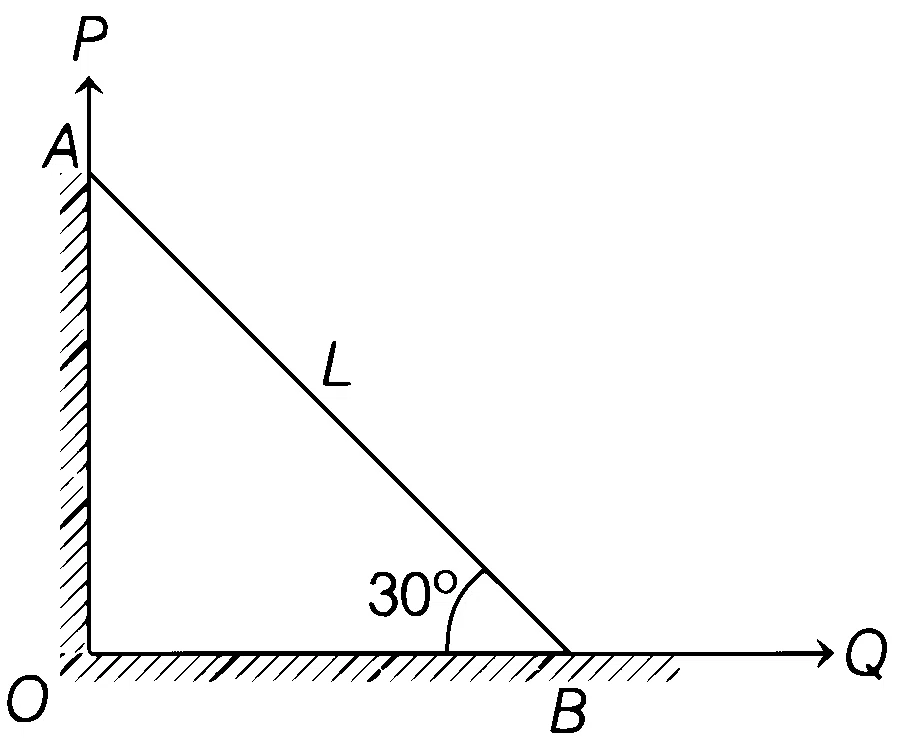
When the rod subtends an angle
A block of mass 10 kg rests on a rough inclined plane making an angle of 30
A man walks in a straight line for 5 min with a velocity of 45 m/s. What is the speed with which he has to move in order to comeback to its original position in 1.5 min?
A projectile is given an initial velocity of