1JEE Advanced 2013 Paper 2 Offline
MCQM+4 / -22013Chemistry
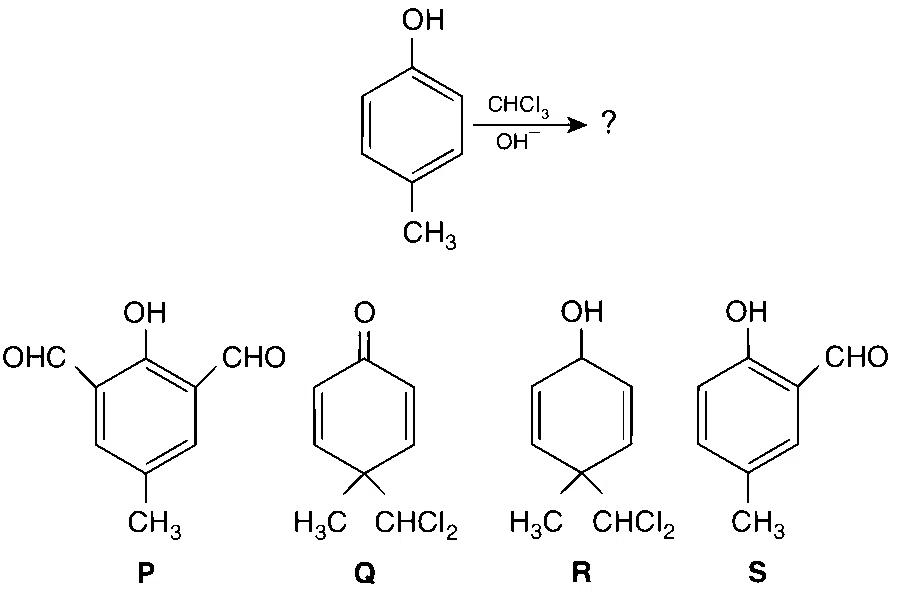
In the following reaction, the product/products formed is/are

JEE Advanced · 2 Jun 2013 · Answers and step-by-step solutions
PDF and print include all subjects in this paper.
Showing 20 of 20 Chemistry questions · Page 1 of 1
In the following reaction, the product/products formed is/are
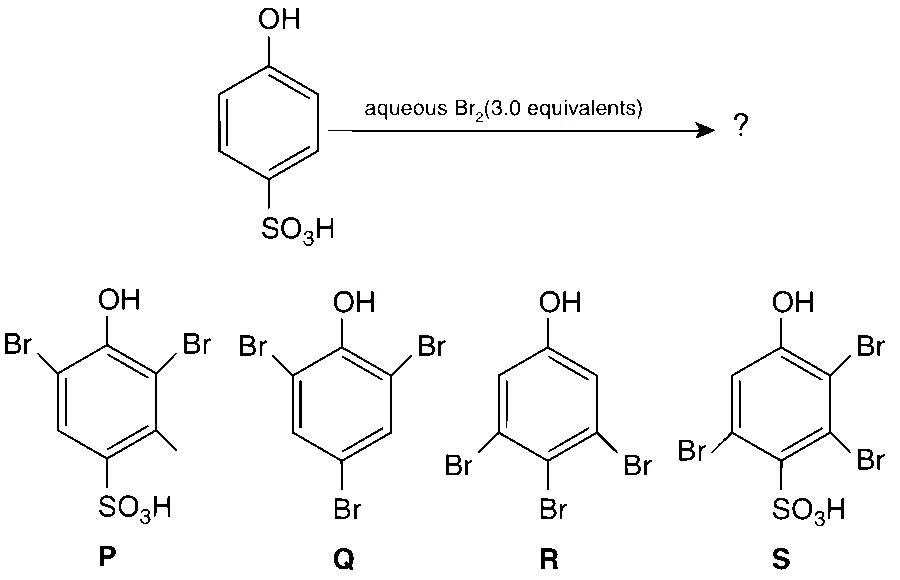
The major product(s) of the following reaction is(are)
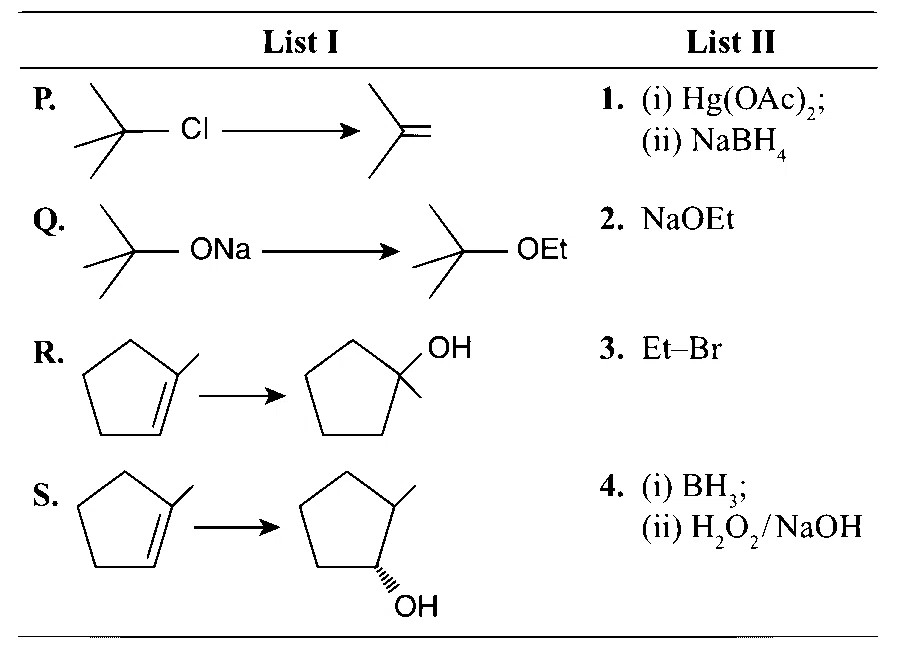
Match the chemical conversions in List I with the appropriate reagents in List II and select the correct answer using the code given below the lists :
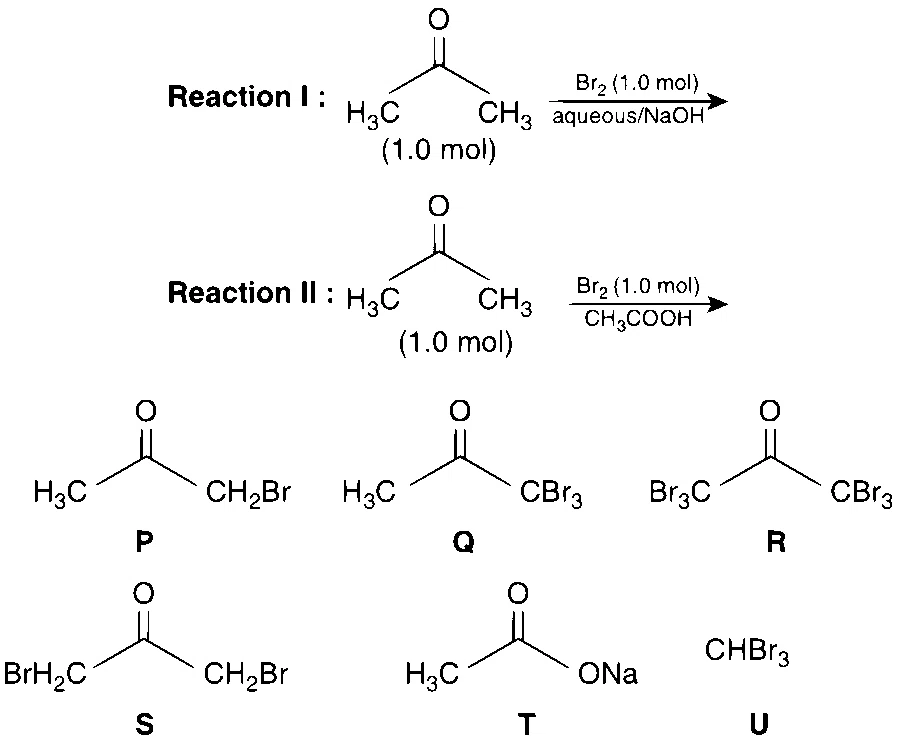
After completion of the reactions (I and II), the organic compound(s) in the reaction mixtures is(are)
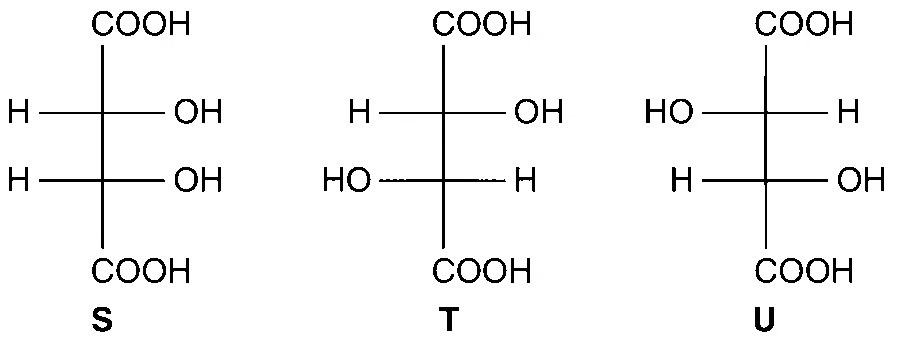
P and Q are isomers of dicarboxylic acid C4H4O4. Both decolorise Br2/H2O. On heating, P forms the cyclic anhydride. Upon treatment with dilute alkaline KMnO4, P as well as Q could produce one or more than one from S, T and U.
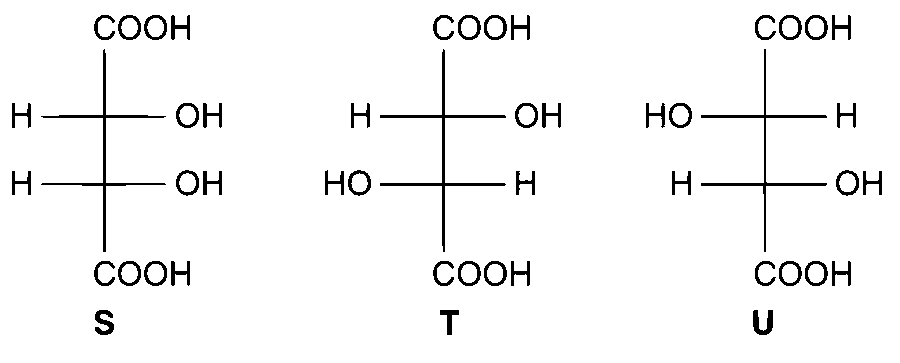
Compounds formed from P and Q are, respectively,
P and Q are isomers of dicarboxylic acid C4H4O4. Both decolorise Br2/H2O. On heating, P forms the cyclic anhydride. Upon treatment with dilute alkaline KMnO4, P as well as Q could produce one or more than one from S, T and U.
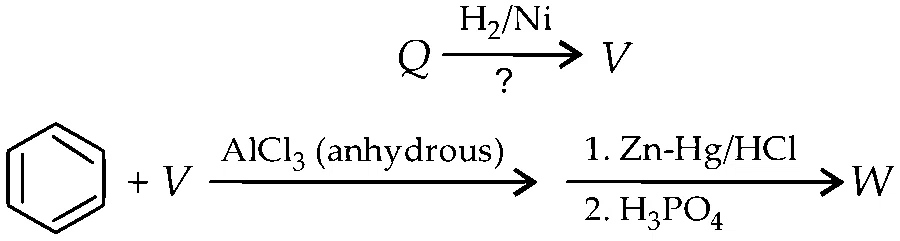
In the following reaction sequences V and W are, respectively,
The correct statement(s) about O3 is(are)
The reaction of Cl2 gas with cold-dilute and hot-concentrated NaOH in water give sodium salts of two (different) oxoacids of chlorine, P and Q, respectively. The Cl2 gas reacts with SO2 gas, in presence of charcoal, to give a product R. R reacts with white phosphorus to give a compound S. On hydrolysis, S gives an oxoacid of phosphorus, T.
The reaction of Cl2 gas with cold-dilute and hot-concentrated NaOH in water give sodium salts of two (different) oxoacids of chlorine, P and Q, respectively. The Cl2 gas reacts with SO2 gas, in presence of charcoal, to give a product R. R reacts with white phosphorus to give a compound S. On hydrolysis, S gives an oxoacid of phosphorus, T.
R, S and T respectively, are
The unbalanced chemical reactions given in List I show missing reagent or condition (?) which are provided in List II. Match List I with List II and select the correct answer using the code given below the lists :
| List I | List II | ||
|---|---|---|---|
| P. | 1. | NO | |
| Q. | 2. | ||
| R. | 3. | Warm | |
| S. | 4. |
An aqueous solution of a mixture of two inorganic salts, when treated with dilute HCl, gave a precipitate (P) and a filtrate (Q). The precipitate (P) was found to dissolve in hot water. The filtrate (Q) remained unchanged, when treated with H2S in a dilute mineral acid medium. However, it gave a precipitate (R) with H2S in an ammoniacal medium. The precipitate R gave a coloured solution (S), when treated with H2O2 in an aqueous NaOH medium.
The precipitate P contains
An aqueous solution of a mixture of two inorganic salts, when treated with dilute HCl, gave a precipitate (P) and a filtrate (Q). The precipitate (P) was found to dissolve in hot water. The filtrate (Q) remained unchanged, when treated with H2S in a dilute mineral acid medium. However, it gave a precipitate (R) with H2S in an ammoniacal medium. The precipitate R gave a coloured solution (S), when treated with H2O2 in an aqueous NaOH medium.
The coloured solution S contains
A fixed mass m of a gas is subjected to transformation of states from K to L to M to N and back to K as shown in the figure.
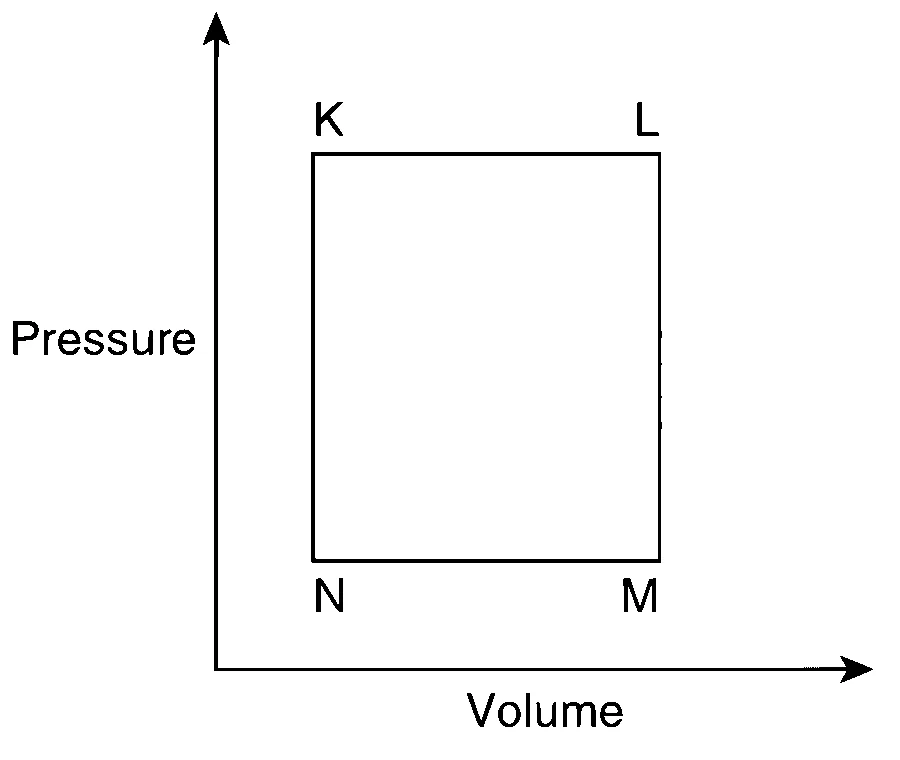
The succeeding operations that enable this transformation of states are
A fixed mass m of a gas is subjected to transformation of states from K to L to M to N and back to K as shown in the figure.
The pair of isochoric processes among the transformation of states is