26TG EAPCET 2025 (Online) 4th May Evening Shift
MCQ+1 / -02025Physics
A proton moving with a velocity of
(Charge of proton

TS EAMCET · 4 May 2025 · Answers and step-by-step solutions
Showing 25 of 160 questions · Page 2 of 7
A proton moving with a velocity of
(Charge of proton
As shown in the figure, a uniform straight wire of length 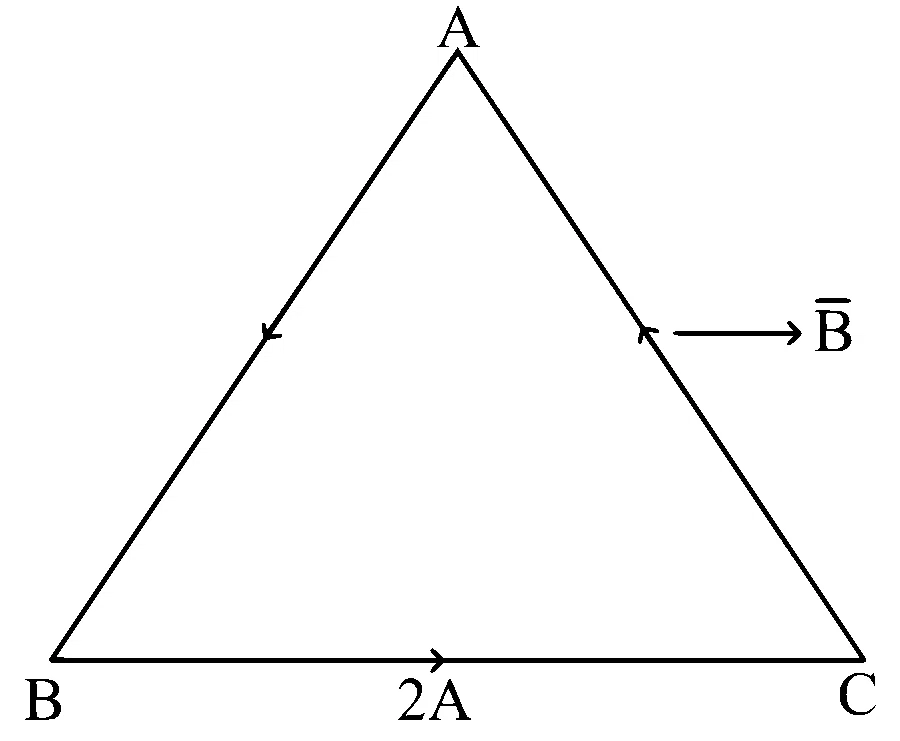
A ray of light incidents at an angle of
A straight metal rod of length 6 cm is placed along the principal axis of a concave mirror of focal length 9 cm such that the end of the rod closer to the mirror is at a distance of 15 cm from the pole of the mirror. The length of the image of the rod is
If the length of a thin uniform rod is '
A solid sphere of mass 2 kg and radius 0.5 m is rolling without slipping on a horizontal surface. The ratio of the rotational and translational kinetic energies of the sphere is
The current amplification factor of a transistor in common emitter configuration is 80 . If the emitter current is 2.43 mA , then the base current is
The negative feedback in an amplifier
The force (
The error in the measurement of force acting normally on a square plate is
The distance for which ray optics becomes a good approximation for an aperture of 0.3 cm and a light of wavelength
The air columns in two tubes closed at one end vibrating in their fundamental modes produce 2 beats per second. The number of beats produced per second when the same tubes are vibrated in their fundamental mode with their both ends open are
A car moving towards a cliff emits sound of frequency '
(Speed of sound in air is
If the kinetic energy of a body moving with a velocity of
A body of mass 0.5 kg is supplied with a power '
An alochol
Toluene on reaction with reagent

In hydrogen atom, an electron is transferred from an orbit of radius 1.3225 nm to another orbit of radius 0.2116 nm . What is the energy (in J ) of emitted radiation?
Observe the following statements.
Statement -I Rutherford model of an atom cannot explain the stability of an atom.
Statement-II The wavelength of X-rays is higher than the wavelength of microwaves.
The correct answer is
Amino acid '
Consider the following set of reactions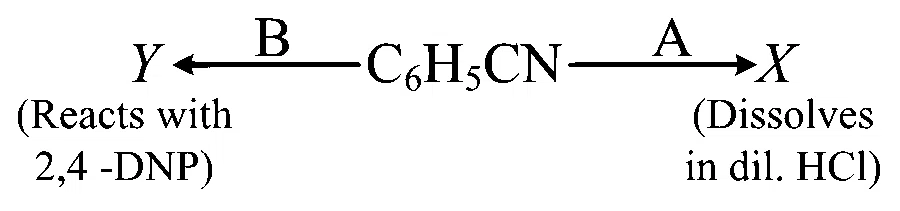
What are
What are
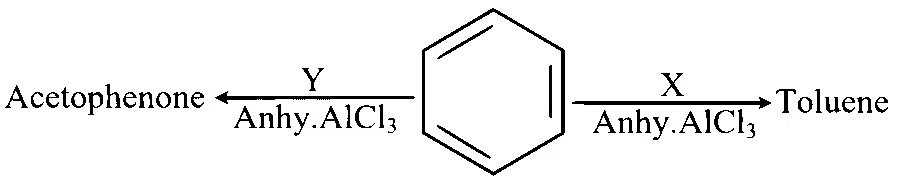
The sets of molecules in which central atom has no lone pair of electrons are
I.
II.
III.
IV.