26IIT-JEE 2011 Paper 2 Offline
MCQ+3 / -12011Chemistry
Amongst the compounds given, the one that would from a brilliant coloured dye on treatment with NaNO2 in dil. HCl followed by addition to an alkaline solution of

JEE Advanced · 10 Apr 2011 · Answers and step-by-step solutions
Showing 25 of 60 questions · Page 2 of 3
Amongst the compounds given, the one that would from a brilliant coloured dye on treatment with NaNO2 in dil. HCl followed by addition to an alkaline solution of
Among the following complexes (K-P),
K3[Fe(CN)6] (K), [Co(NH3)6]Cl3 (L), Na3[Co(oxalate)3] (M), [Ni(H2O)3]Cl2 (N), K2[Pt(CN)4] (O) and [Zn(H2O)6(NO3)2] (P)
The diamagnetic complexes are
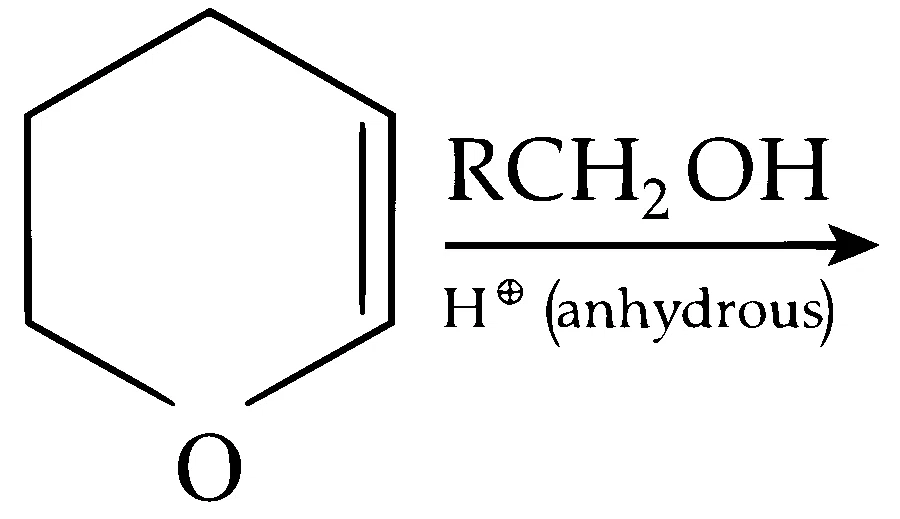
The major product of the following reaction is
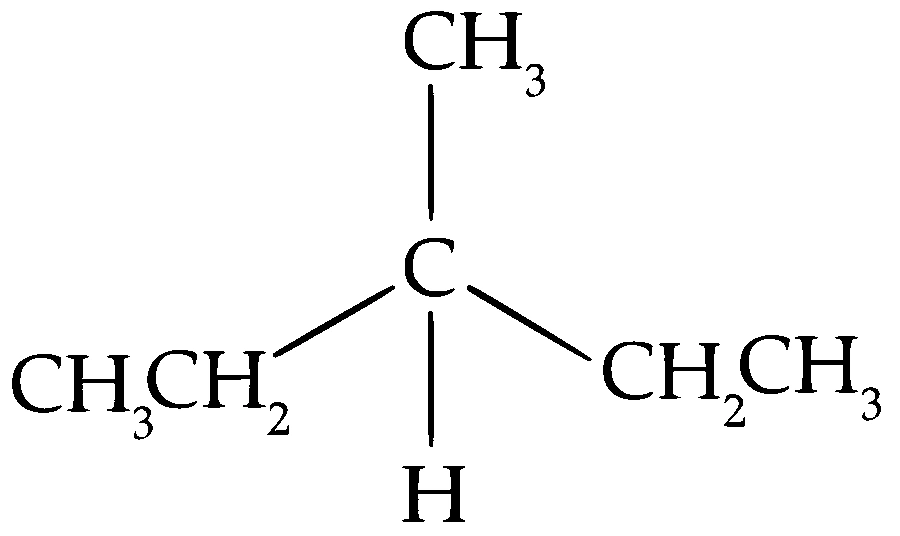
The maximum number of isomers (including stereoisomers) that are possible on mono-chlorination of the following compound, is ____________.
Among the following, the number of compounds that can react with PCl5 to given POCl3 is _____________.
O2, CO2, SO2, H2O, H2SO4, P4O10
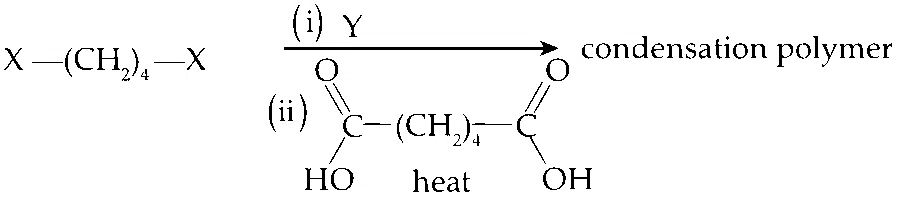
The correct functional group X and the reagent/reaction condition Y in the following scheme are
Reduction of the metal centre in aqueous permanganate ion involves
Passing H2S gas into a mixture of Mn2+, Ni2+, Cu2+ and Hg2+ ions in an acidified aqueous solution precipitates
The volume (in mL) of 0.1 M AgNO3 required for complete precipitation of chloride ions present in 30 mL of 0.01 M solution of
Let
Then the value of
Let f(x) = x2 and g(x) = sin x for all x
Let
Match the statements given in Column I with the intervals/union of intervals given in Column II :
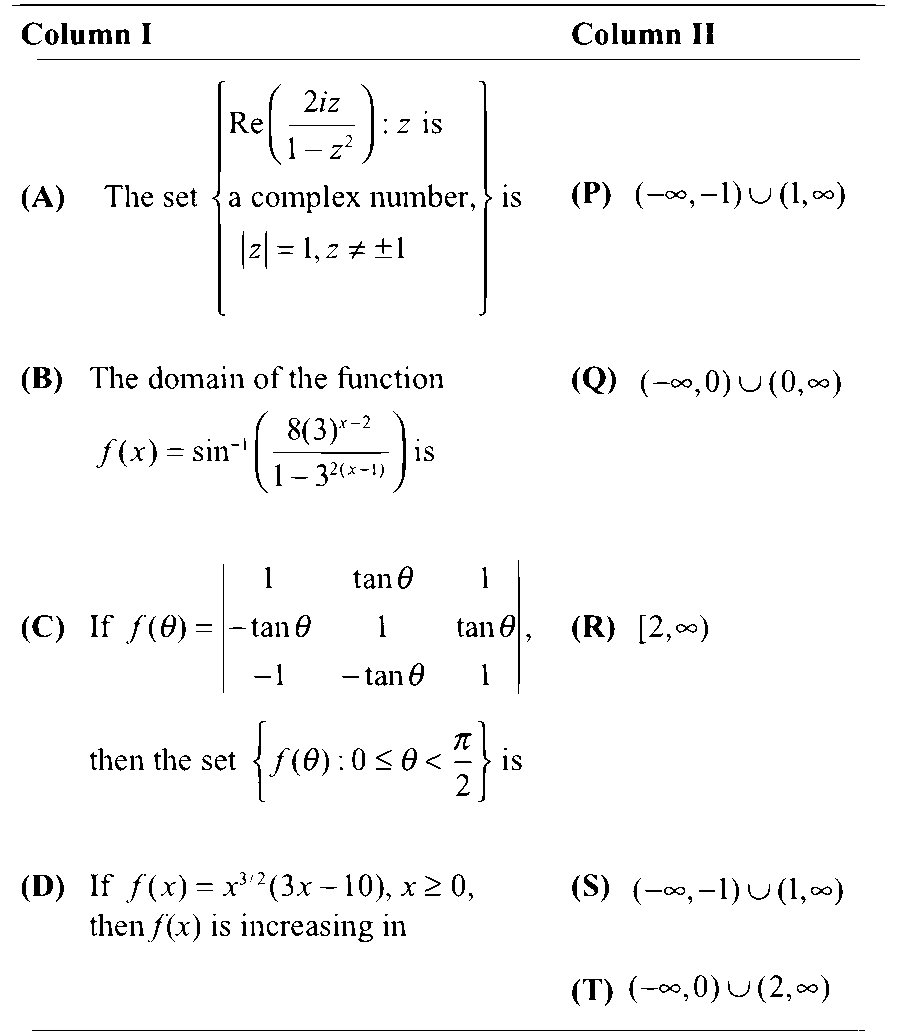
If