26IIT-JEE 2008 Paper 1 Offline
MCQ+3 / -02008Chemistry
In the following reaction sequence, products I, J and L are formed. K represents a reagent.
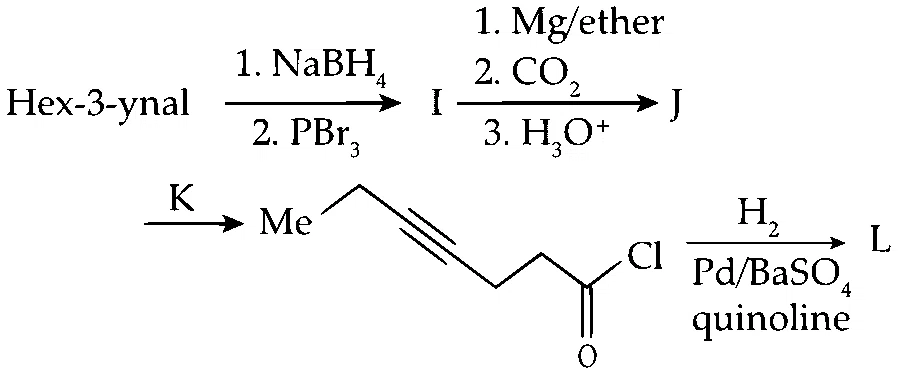
The structure of product L is :

JEE Advanced · 13 Apr 2008 · Answers and step-by-step solutions
Showing 25 of 69 questions · Page 2 of 3
In the following reaction sequence, products I, J and L are formed. K represents a reagent.
The structure of product L is :
Hyperconjugation involves overlapping of the following orbitals:
The correct statement(s) concerning the structures E, F and G is(are) :

Statement 1 : For every chemical reaction at equilibrium, standard Gibbs energy of reaction is zero.
and
Statement 2 : At constant temperature and pressure, chemical reactions are spontaneous in the direction of decreasing Gibbs energy.
Under the same reaction conditions, initial concentration of 1.386 mol dm
A gas described by van Der Waals equation
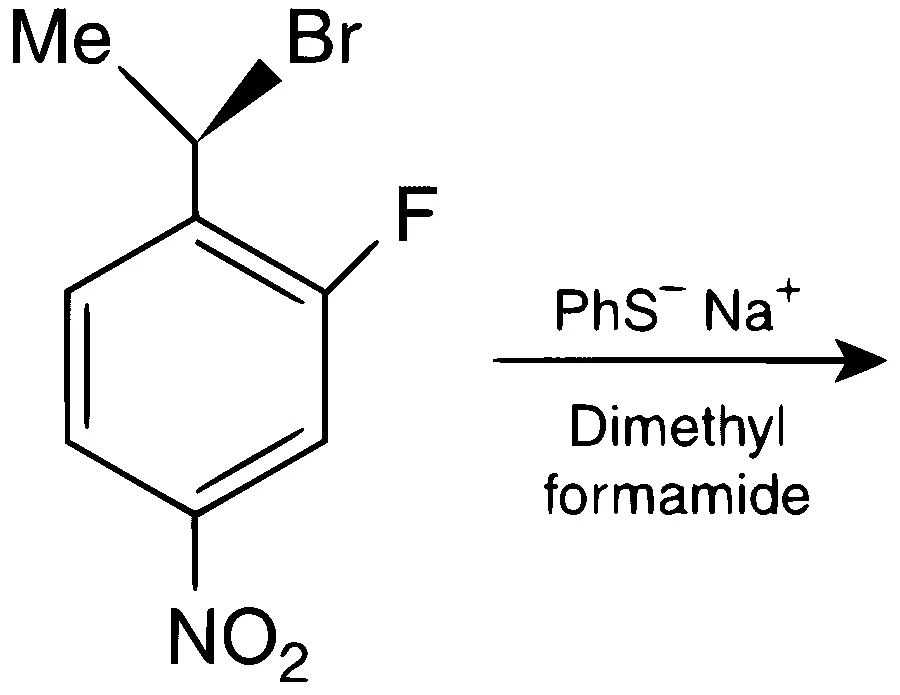
The major product of the following reaction is:
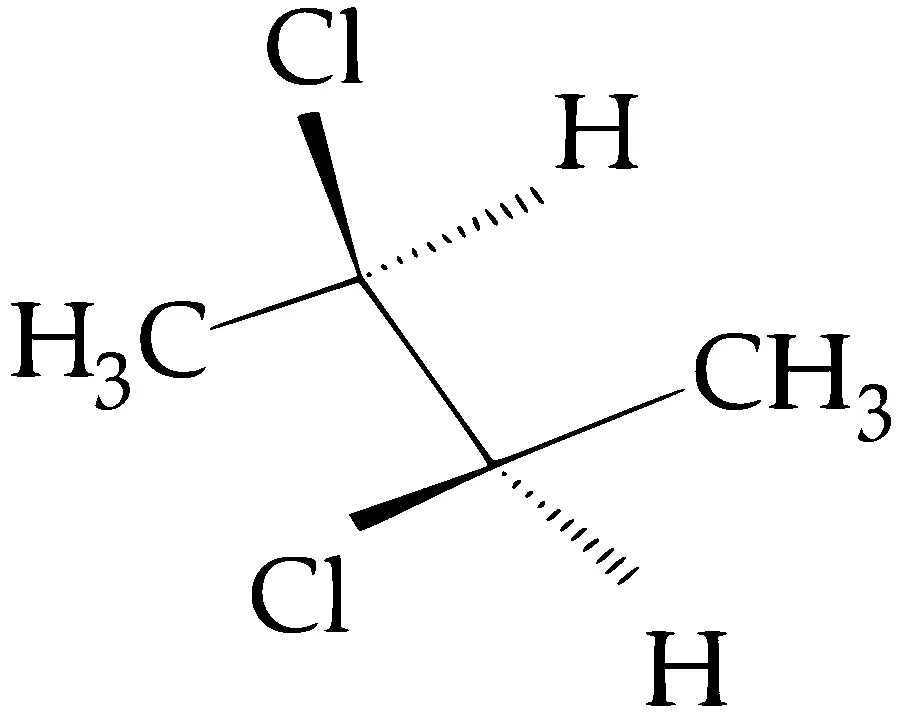
The correct statement(s) about the compound given below is(are):
Statement 1 : Bromobenzene upon reaction with Br
and
Statement 2: In bromobenzene, the inductive effect of the bromo group is more dominant than the mesomeric effect in directing the incoming electrophile.
2.5 mL of
Native silver metal forms a water soluble complex with a dilute aqueous solution of NaCN in the presence of:
A solution of colourless salt H on boiling with excess NaOH produces a non-flammable gas. The gas evolution ceases after sometime. Upon addition of Zn dust to the same solution, the gas evolution restarts. The colourless salt(s) H is(are):
Statement 1 : Pb
and
Statement 2 : The higher oxidation states for the group 14 elements are more stable for the heavier members of the group due to 'inert pair effect'.
There are some deposits of nitrates and phosphates in earth's crust. Nitrates are more soluble in water. Nitrates are difficult to reduce under the laboratory conditions but microbes do it easily. Ammonia forms large number of complexes with transition metal ions. Hybridisation easily explains the ease of sigma donation capability of NH
Among the following, the correct statement is:
There are some deposits of nitrates and phosphates in earth's crust. Nitrates are more soluble in water. Nitrates are difficult to reduce under the laboratory conditions but microbes do it easily. Ammonia forms large number of complexes with transition metal ions. Hybridisation easily explains the ease of sigma donation capability of NH
Among the following, the correct statement is :
There are some deposits of nitrates and phosphates in earth's crust. Nitrates are more soluble in water. Nitrates are difficult to reduce under the laboratory conditions but microbes do it easily. Ammonia forms large number of complexes with transition metal ions. Hybridisation easily explains the ease of sigma donation capability of NH
White phosphorus on reaction with NaOH gives PH
Aqueous solutions of Na
Properties such as boiling point, freezing point and vapour pressure of a pure solvent change when solute molecules are added to get homogeneous solution. These are called colligative properties. Applications of colligative properties are very useful in day-to-day life. One of its examples is the use of ethylene glycol and water mixture as anti-freezing liquid in the radiator of automobiles.
A solution M is prepared by mixing ethanol and water. The mole fraction of ethanol in the mixture is 0.9.
Given:
Freezing point depression constant of water
Freezing point depression constant of ethanol
Boiling point elevation constant of water
Boiling point elevation constant of ethanol
Standard freezing point of water = 273 K
Standard freezing point of ethanol = 155.7 K
Standard boiling point of water = 373 K
Standard boiling point of ethanol = 351.5 K
Vapour pressure of pure water = 32.8 mm Hg
Vapour pressure of pure water = 40 mm Hg
Molecular weight of water = 18 g mol
Molecular weight of ethanol = 46 g mol
In answering the following questions, consider the solutions to be ideal dilute solutions and solutes to be non-volatile and non-dissociative.
The freezing point of the solution M is :
Properties such as boiling point, freezing point and vapour pressure of a pure solvent change when solute molecules are added to get homogeneous solution. These are called colligative properties. Applications of colligative properties are very useful in day-to-day life. One of its examples is the use of ethylene glycol and water mixture as anti-freezing liquid in the radiator of automobiles.
A solution M is prepared by mixing ethanol and water. The mole fraction of ethanol in the mixture is 0.9.
Given:
Freezing point depression constant of water
Freezing point depression constant of ethanol
Boiling point elevation constant of water
Boiling point elevation constant of ethanol
Standard freezing point of water = 273 K
Standard freezing point of ethanol = 155.7 K
Standard boiling point of water = 373 K
Standard boiling point of ethanol = 351.5 K
Vapour pressure of pure water = 32.8 mm Hg
Vapour pressure of pure ethanol = 40 mm Hg
Molecular weight of water = 18 g mol
Molecular weight of ethanol = 46 g mol
In answering the following questions, consider the solutions to be ideal dilute solutions and solutes to be non-volatile and non-dissociative.
The vapour pressure of the solution M is :
Properties such as boiling point, freezing point and vapour pressure of a pure solvent change when solute molecules are added to get homogeneous solution. These are called colligative properties. Applications of colligative properties are very useful in day-to-day life. One of its examples is the use of ethylene glycol and water mixture as anti-freezing liquid in the radiator of automobiles.
A solution M is prepared by mixing ethanol and water. The mole fraction of ethanol in the mixture is 0.9.
Given:
Freezing point depression constant of water
Freezing point depression constant of ethanol
Boiling point elevation constant of water
Boiling point elevation constant of ethanol
Standard freezing point of water = 273 K
Standard freezing point of ethanol = 155.7 K
Standard boiling point of water = 373 K
Standard boiling point of ethanol = 351.5 K
Vapour pressure of pure water = 32.8 mm Hg
Vapour pressure of pure water = 40 mm Hg
Molecular weight of water = 18 g mol
Molecular weight of ethanol = 46 g mol
In answering the following questions, consider the solutions to be ideal dilute solutions and solutes to be non-volatile and non-dissociative.
Water is added to the solution M such that the fraction of water in the solution becomes 0.9 mole. The boiling point of this solution is:
Let \)
STATEMENT - 1Z: At least two of the lines \)
STATEMENT - 2: The three planes doe not have a common point.
The total number of local maxima and local minima of the function
Consider the functions defined implicitly by the equation
The area of the region bounded by the curve
The equation of circle C is