PracBee
Back

IIT-JEE 2006 Chemistry Questions

JEE Advanced · 11 Apr 2006 · Answers and step-by-step solutions

Paper PDF and print

PDF and print include all subjects in this paper.

Showing 25 of 40 Chemistry questions · Page 1 of 2

1IIT-JEE 2006
MCQ+3 / -12006Chemistry

When benzene sulphonic acid and p-nitrophenol are treated with NaHCO3, the gases released respectively are

2IIT-JEE 2006
MCQ+3 / -12006Chemistry

(I) 1,2-Dihydroxybenzene


(II) 1,3-Dihydroxybenzene


(III) 1,4-Dihydroxybenzene


(IV) Hydroxy benzene


The increasing order of boiling points of the above mentioned alcohols is

3IIT-JEE 2006
MCQM+3 / -12006Chemistry

Which of the following reactants on reaction with conc. NaOH followed by acidification gives the following lactone as the only product?
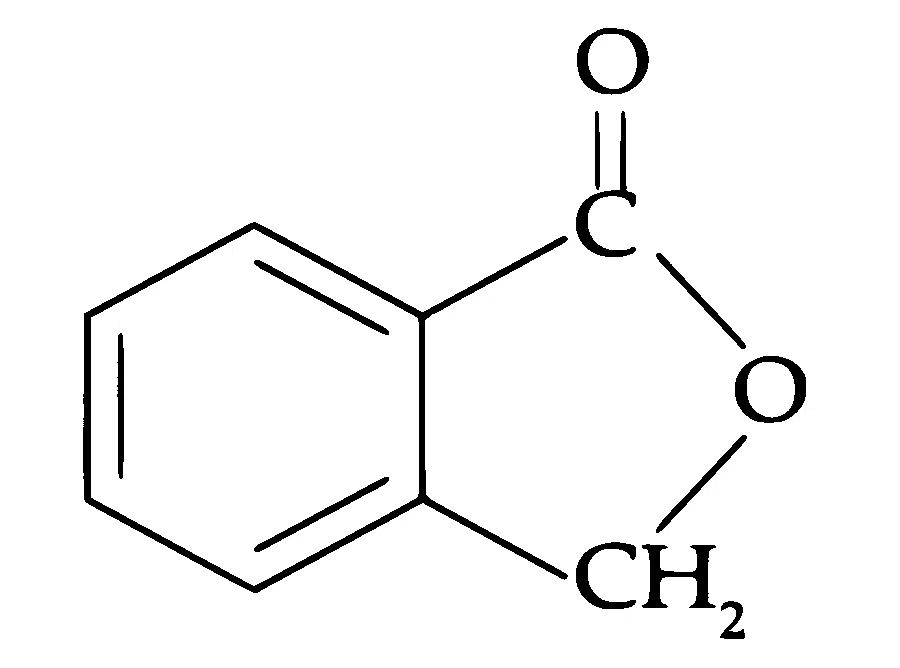

IIT-JEE 2006 Chemistry - Aldehydes, Ketones and Carboxylic Acids Question 8 English
4IIT-JEE 2006
MCQM+3 / -12006Chemistry
The smallest ketone and its next homologue are reacted with NH2OH to form oxime.
5IIT-JEE 2006
MCQM+3 / -12006Chemistry
IIT-JEE 2006 Chemistry - Basics of Organic Chemistry Question 1 English

What are N and M?

6IIT-JEE 2006
MCQ+3 / -12006Chemistry

Ag++NH3[Ag(NH3)]+k1=3.5×10⁻³[Ag(NH3]++NH3[Ag(NH3)2]+


k2=1.7×10⁻³, then the formation constant of [Ag(NH3)2]+ is :

7IIT-JEE 2006
MCQ+3 / -12006Chemistry

N2+3H2→2NH3


Which is the correct statement if N2 is added at equilibrium condition?

8IIT-JEE 2006
MCQ+3 / -12006Chemistry

Carbon-14 is used to determine the age of organic material. The procedure is based on the formation of 14C by neutron capture in the upper atmosphere.


14 N+01n→614C+11H


14C is absorbed by living organisms during photosynthesis. The 14C content is constant in living organism once the plant or animal dies, the uptake of carbon dioxide by it ceases and the level of 14C in the dead being, falls due to decay which 14C undergoes.


614C→714 N+β−


The half-life period of 14C is 5770 years. The decay constant ( λ ) be calculated by using the following formula λ=0.693t1/2.


The comparison of the β−activity of the dead matter with that of the carbon still in circulation enables measurement of the period of the isolation of the material from the living cycle. The method however, ceases to be accurate over periods longer than 30,000 years. The proportion of 14C to 12C in living matter is 1:1012.

Which of the following option is correct?

9IIT-JEE 2006
MCQ+3 / -12006Chemistry

Carbon-14 is used to determine the age of organic material. The procedure is based on the formation of 14C by neutron capture in the upper atmosphere.


14 N+01n→614C+11H


14C is absorbed by living organisms during photosynthesis. The 14C content is constant in living organism once the plant or animal dies, the uptake of carbon dioxide by it ceases and the level of 14C in the dead being, falls due to decay which 14C undergoes.


614C→714 N+β−


The half-life period of 14C is 5770 years. The decay constant ( λ ) be calculated by using the following formula λ=0.693t1/2.


The comparison of the β−activity of the dead matter with that of the carbon still in circulation enables measurement of the period of the isolation of the material from the living cycle. The method however, ceases to be accurate over periods longer than 30,000 years. The proportion of 14C to 12C in living matter is 1:1012.

What should be the age of fossil for meaningful determination of its age?

10IIT-JEE 2006
MCQ+3 / -12006Chemistry

Carbon-14 is used to determine the age of organic material. The procedure is based on the formation of 14C by neutron capture in the upper atmosphere.


14 N+01n→614C+11H


14C is absorbed by living organisms during photosynthesis. The 14C content is constant in living organism once the plant or animal dies, the uptake of carbon dioxide by it ceases and the level of 14C in the dead being, falls due to decay which 14C undergoes.


614C→714 N+β−


The half-life period of 14C is 5770 years. The decay constant ( λ ) be calculated by using the following formula λ=0.693t1/2.


The comparison of the β−activity of the dead matter with that of the carbon still in circulation enables measurement of the period of the isolation of the material from the living cycle. The method however, ceases to be accurate over periods longer than 30,000 years. The proportion of 14C to 12C in living matter is 1:1012.

A nuclear explosion has taken place leading to increase in concentration of 14C in nearby areas. 14C concentration is C1 in nearby areas and C2 in areas far away. If the age of the fossil is determined to be T1 and T2 at the places respectively then,

11IIT-JEE 2006
MCQ+3 / -02006Chemistry

 Match Column I with Column II : 

Column IColumn II
(A)CH3−CHBr−CD3 on treatment with alc. KOH gives CH2=CH−CD3 as a major product.(P)E1 reaction
(B)Ph−CHBr−CH3 reacts faster than Ph−CHBr−CD3.(Q)E2 reaction
(C)Ph−CH2−CH2Br

on treatment with

C2H5OD/C2H5O−

gives Ph−CD=CH2
as the major product.
(R)E1 cb reaction
(D)PhCH2,CH2Br and PhCD2CH2Br react with same rate.(S)First order reaction
12IIT-JEE 2006
MCQ+3 / -12006Chemistry

CH3NH2+CHCl3+KOH→ Nitrogen containing compound +KCl+H2O.


Nitrogen containing compound is :

13IIT-JEE 2006
MCQ+3 / -12006Chemistry

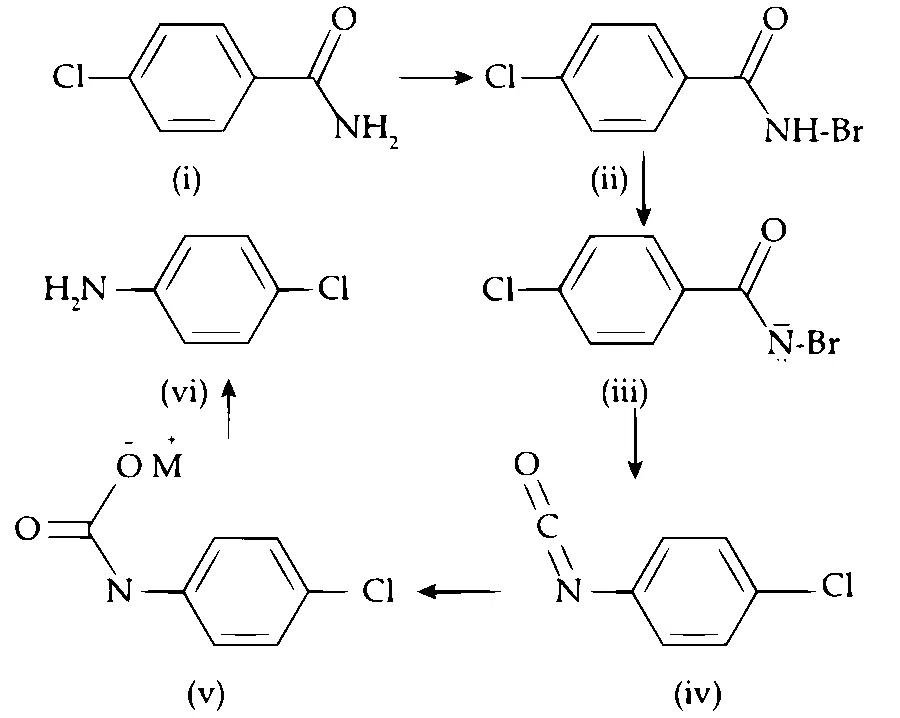
RCONH2 is converted into RNH2 by means of Hofmann bromamide degradation.


IIT-JEE 2006 Chemistry - Compounds Containing Nitrogen Question 4 English Comprehension


In this reaction, RCONHBr is formed from which this reaction has derived its name. Electron donating group at phenyl activates the reaction. Hofmann degradation reaction is an intramolecular reaction.

Which is the rate determining step in Hofmann bromamide degradation?

14IIT-JEE 2006
MCQ+3 / -12006Chemistry

RCONH2 is converted into RNH2 by means of Hofmann bromamide degradation.


IIT-JEE 2006 Chemistry - Compounds Containing Nitrogen Question 3 English Comprehension


In this reaction, RCONHBr is formed from which this reaction has derived its name. Electron donating group at phenyl activates the reaction. Hofmann degradation reaction is an intramolecular reaction.

What are the constituent amines formed when the mixture of (i) and (ii) undergoes Hofmann bromamide degradation?
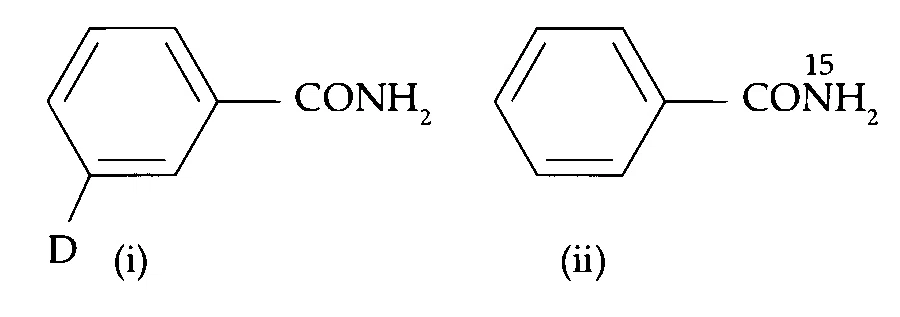
IIT-JEE 2006 Chemistry - Compounds Containing Nitrogen Question 3 English
15IIT-JEE 2006
MCQ+3 / -12006Chemistry

RCONH2 is converted into RNH2 by means of Hofmann bromamide degradation.


IIT-JEE 2006 Chemistry - Compounds Containing Nitrogen Question 2 English Comprehension


In this reaction, RCONHBr is formed from which this reaction has derived its name. Electron donating group at phenyl activates the reaction. Hofmann degradation reaction is an intramolecular reaction.

How can the conversion of (i) to (ii) be brought about?

16IIT-JEE 2006
MCQ+3 / -12006Chemistry

The coordination of Ni2+ is 4.


NiCl2+KCN (excess) → A (cyano complex)


NiCl2+conc. HCl (excess) → B (chloro complex)

The IUPAC names of A and B are

17IIT-JEE 2006
MCQ+3 / -12006Chemistry

The coordination of Ni2+ is 4.


NiCl2+KCN (excess) → A (cyano complex)


NiCl2+conc. HCl (excess) → B (chloro complex)

The hybridisation of A and B are :

18IIT-JEE 2006
MCQ+3 / -12006Chemistry

The coordination of Ni2+ is 4.


NiCl2+KCN (excess) → A (cyano complex)


NiCl2+conc. HCl (excess) → B (chloro complex)

Predict the magnetic nature of A and B.

19IIT-JEE 2006
MCQM+3 / -12006Chemistry

If the bond length of CO bond in carbon monoxide is 1.128Ao, then what is the value of CO bond length in Fe(CO)5?


20IIT-JEE 2006
INTEGER+6 / -02006Chemistry
We have taken a saturated solution of AgBr. Ksp of AgBr is 12 × 10-14. If 10-7 mole of AgNO3 are added to 1 litre of this solution find conductivity (specific conductance) of this solution in terms of 10-7 S m-1 units. Given, molar conductance of Ag+, Br- and NO3− are 6 × 10⁻³ Sm2 mol-1, 8 × 10⁻³ Sm2 mol-1 and 7 × 10⁻³ Sm2 mol-1
21IIT-JEE 2006
MCQ+3 / -12006Chemistry

Tollen's reagent is used for the detection of aldehyde when a solution of AgNO3 is added to glucose with NH4OH then gluconic acid is formed.


Ag++e−→Ag;Ered o=0.8 VC6H12O6+H2O→ Gluconic acid (C6H12O7)+2H++2e;Eoxd o=−0.05 VAg(NH3)2++e−→Ag( s)+2NH3;Ered o=0.337 V


[Use 2.303× RT  F =0.0592 and


FRT=38.92 at 298 K]

2Ag++C6H12O6+H2O→2Ag( s)+C6H12O7+2H+


Find ln⁡K of this reaction.

22IIT-JEE 2006
MCQ+3 / -12006Chemistry

Tollen's reagent is used for the detection of aldehyde when a solution of AgNO3 is added to glucose with NH4OH then gluconic acid is formed.


Ag++e−→Ag;Ered o=0.8 VC6H12O6+H2O→ Gluconic acid (C6H12O7)+2H++2e;Eoxd o=−0.05 VAg(NH3)2++e−→Ag( s)+2NH3;Ered o=0.337 V


[Use 2.303× RT  F =0.0592 and


FRT=38.92 at 298 K]

When ammonia is added to the solution, pH is raised to 11 . Which half-cell reaction is affected by pH and by how much?

23IIT-JEE 2006
MCQ+3 / -12006Chemistry

Tollen's reagent is used for the detection of aldehyde when a solution of AgNO3 is added to glucose with NH4OH then gluconic acid is formed.


Ag++e−→Ag;Ered o=0.8 VC6H12O6+H2O→ Gluconic acid (C6H12O7)+2H++2e;Eoxd o=−0.05 VAg(NH3)2++e−→Ag( s)+2NH3;Ered o=0.337 V


[Use 2.303× RT  F =0.0592 and


FRT=38.92 at 298 K]

Ammonia is always added in this reaction. Which of the following must be incorrect?

24IIT-JEE 2006
MCQM+3 / -12006Chemistry

The given graph represents the variation of Z (compressibility factor =PV/nRT ) versus P , for three real gases A,B and C . Identify the only incorrect statement.
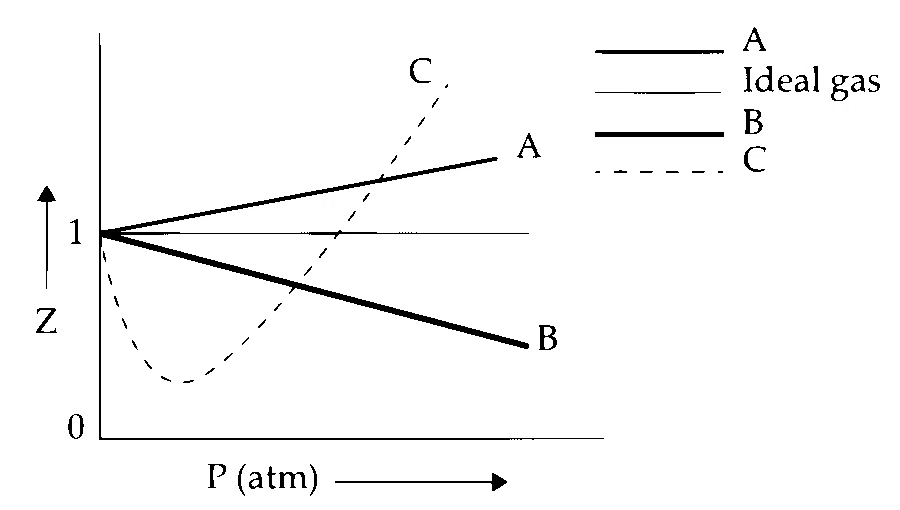
IIT-JEE 2006 Chemistry - Gaseous State Question 2 English
25IIT-JEE 2006
MCQ+3 / -12006Chemistry

The IUPAC name of C6H5COCl is