PracBee
Back

IIT-JEE 1979 Question Paper

JEE Advanced · 11 Apr 1979 · Answers and step-by-step solutions

Paper PDF and print

Showing 25 of 39 questions · Page 1 of 2

1IIT-JEE 1979
SUBJECTIVE+4 / -01979Physics
Answer the following giving reason in brief:
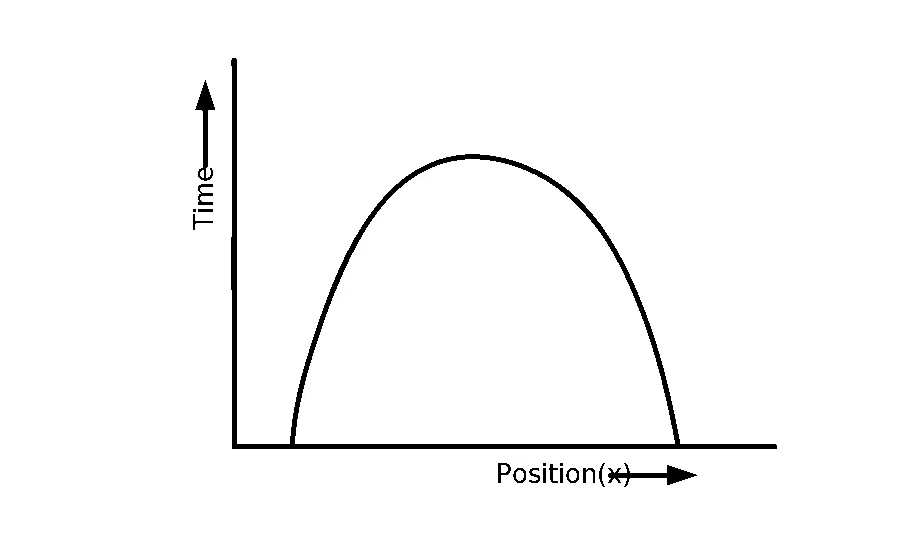
Is the time variation of position, shown in the figure observed in nature?


IIT-JEE 1979 Physics - Motion Question 15 English
2IIT-JEE 1979
SUBJECTIVE+4 / -01979Physics
The dispalcement x of particle moving in one direction, under the action of a constant force is related to the time t by the equation t=x+3

where x is in meters and t in seconds. Find

(i) The displacement of the particle when its velocity is zero, and


(ii) The work done by the force in the first 6 seconds.

3IIT-JEE 1979
MCQ+2 / -0.51979Chemistry
The compound which contains both ionic and covalent bonds is
4IIT-JEE 1979
MCQ+2 / -0.51979Chemistry
The octet rule is not valid for the molecule
5IIT-JEE 1979
SUBJECTIVE+4 / -01979Chemistry

A white amorphous powder (A) on heating yields a
colourless, non-combustible gas (B) and a solid (C).
The latter compound assumes a yellow colour on heating
and changes to white on cooling. (C) dissolves in dilute
acid and the resulting solution gives a white precipitate
on adding K4Fe(CN)6
solution.


(A) dissolves in dilute HCl with the evolution of gas,
which is identical in all respects with (B). The gas (B)
turns lime water milky, but the milkiness disappears with
the continuous passage of gas. The solution of (A), as
obtained above, gives a white precipitate (D) on the
addition of excess of NH4OH and passing H2S. Another
portion of the solution gives initially a white precipitate
(E) on the addition of sodium hydroxide solution, which
dissolves on further addition of the base. Identify the
compounds (A), (B), (C), (D) and (E).

6IIT-JEE 1979
SUBJECTIVE+2 / -01979Chemistry
The precipitation of second group sulphides in qualitative
analysis is carried out with hydrogen sulphide in the presence
of hydrochloric acid but not in nitric acid. Explain.
7IIT-JEE 1979
SUBJECTIVE+2 / -01979Chemistry
4.215 g of a metallic carbonate was heated in a hard glass tube and the CO2 evolved was found to measure 1336 ml at 27oC and 700 mm pressure. What is the equivalent weight of metal?
8IIT-JEE 1979
MCQ+2 / -0.51979Chemistry
The total number of electrons is one molecule of carbon dioxide is
9IIT-JEE 1979
SUBJECTIVE+4 / -01979Chemistry
5 ml of a gas containing only carbon and hydrogen were mixed with an excess of oxygen (30 ml) and the mixture exploded by means of an electric spark. After the explosion, the volume of the mixed gases remaining was 25 ml. On adding a concentrated solution of potassium hydroxide, the volume further diminished to 15 ml of the residual gas being pure oxygen. All volumes have been reduced to N.T.P. Calculate the molecular formula of the hydrocarbon gas.
10IIT-JEE 1979
MCQ+2 / -0.51979Chemistry
The largest number of molecules is in
11IIT-JEE 1979
SUBJECTIVE+4 / -01979Chemistry
(a). 5.5 g of a mixture FeSO4.7H2O and Fe2(SO4)3.9H2O requires 5.4 ml of 0.1 N KMnO4 solution for complete oxidation. Calculate the number of gram mole of hydrated ferric sulphate in the mixture.


(b). The vapour density (hydrogen = 1) of a mixture consisting of NO2 and N2O4 is 38.3 at 26.7oC. Calculate the number of moles of NO2 in 100 g of the mixure.
12IIT-JEE 1979
SUBJECTIVE+3 / -01979Chemistry

Account for the following : Limit your answer to two
sentences.


"Atomic weights of most of the elements are fractional."

13IIT-JEE 1979
SUBJECTIVE+4 / -01979Chemistry
In the analysis of 0.5 g sample feldspar, a mixture of chlorides of sodium and potassium is obtained which weighs 0.1180g. Subsequent treatment of mixed chlorides with silver nitrate gives 0.2451 g of silver chloride. What is the percentage of sodium oxide and potassium oxide in feldspar.
14IIT-JEE 1979
MCQ+2 / -0.51979Chemistry
2.76 g of silver carbonate on being strongly heated yields a residue weighing
15IIT-JEE 1979
MCQ+4 / -11979Chemistry
A gaseous mixture contains oxygen and nitrogen in the ratio of 1 : 4 by weight. Therefore the ratio of their no of molecules is
16IIT-JEE 1979
MCQ+1 / -0.251979Chemistry
The number of neutrons in dipositive zinc ion with mass number 70 is
17IIT-JEE 1979
SUBJECTIVE+2 / -01979Mathematics
Prove that the minimum value of (a+x)(b+x)(c+x),

a,b>c,x>−c is (a−c+b−c)2.
18IIT-JEE 1979
SUBJECTIVE+2 / -01979Mathematics
If x + iy = a+ibc+id, prove that (x2+y2)2=a2+b2c2+d2.
19IIT-JEE 1979
MCQ+2 / -0.51979Mathematics
If the cube roots of unity are 1,ω,ω2, then the roots of the equation (x−1)3+8=0 are
20IIT-JEE 1979
SUBJECTIVE+4 / -01979Mathematics
Find the derivative of
$f(x)={x−12x2−7x+5whenx≠1−13whenx=1\(
at \)x=1$
21IIT-JEE 1979
SUBJECTIVE+3 / -01979Mathematics
Evaluate ∫x2dx(a+bx)2
22IIT-JEE 1979
SUBJECTIVE+5 / -01979Mathematics
Given that C1+2C2x+3C3x2+.........+2nC2nx2n−1=2n(1+x)2n−1

where Cr=(2n)!r!(2n−r)!r=0,1,2,............,2n

Prove that C12−2C22+3C32−............−2nC2n2=(−1)nnCn.
23IIT-JEE 1979
MCQ+2 / -0.51979Mathematics
nCr−1=36,nCr=84andnCr+1=126, then r is :
24IIT-JEE 1979
MCQ+1 / -0.251979Mathematics
Two fair dice are tossed. Let x be the event that the first die shows an even number and y be the event that the second die shows an odd number. The two events x and y are:
25IIT-JEE 1979
SUBJECTIVE+4 / -01979Mathematics
Six boys and six girls sit in a row randomly. Find the probability that

(i) the six girls sit together

(ii) the boys and girls sit alternately.