26BITSAT 2020
MCQ+3 / -12020Physics
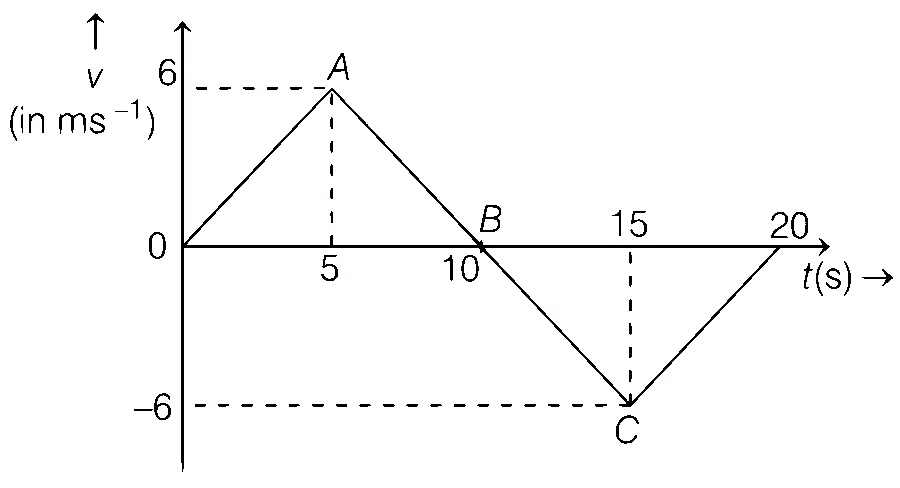
Based on the provided velocity-time graph for an object’s straight-line movement, determine the total distance covered and the average speed between t = 0 and t = 20 seconds.

BITSAT · Answers and step-by-step solutions
PDF and print include all subjects in this paper.
Showing 15 of 40 Physics questions · Page 2 of 2
Based on the provided velocity-time graph for an object’s straight-line movement, determine the total distance covered and the average speed between t = 0 and t = 20 seconds.
The acceleration of a particle in m/s2 is given by a = (3t2
What is the magnitude of the force experienced per unit length by a thin wire that carries a current of I = 10 A and is formed into a semi-circle with a radius of R = 20
A thin equi-convex lens is made of glass of refractive index 1.5 and its focal length is 0.2 m. If it acts as a concave lens of focal length 0.5 cm when dipped in a liquid, the refractive index of the liquid is
A spherical lens of power
The wheel of a car, accelerated uniformly from rest, rotates through 5 radians during the first second. The angle (in radians) rotated during the next second is
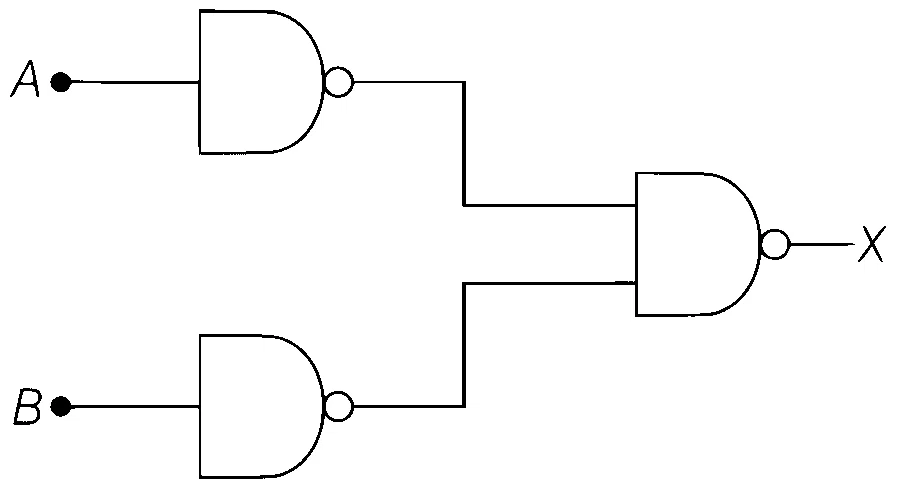
The combination of the gates shown in following figure yields
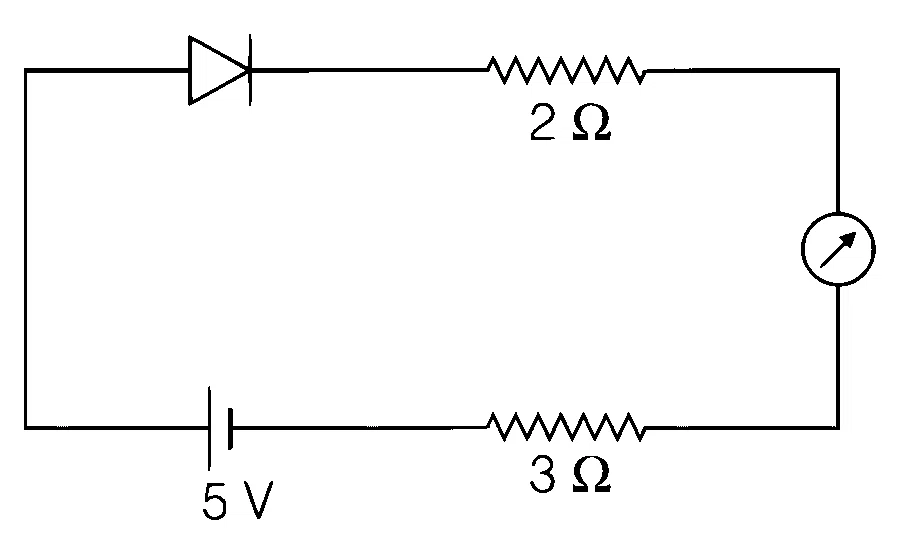
The reading of the ammeter for a germanium diode in the given circuit is
A simple pendulum is placed inside a lift, the lift is moving with a uniform acceleration. If the time periods of the pendulum while the lift is moving upwards and downwards are in the ratio of 1 : 3, then the acceleration of the lift is
[Take acceleration due to gravity, g = 10 m/s2]
The length of the rectangle is l = 15.2 cm and breadth is b = 2.9 cm and the minimum possible measurement by scale = 0.1 cm. Then, the area of the rectangle is (Taking significant figures into consideration)
If L, R, C and V represent inductance, resistance, capacitance and potential difference respectively, then dimensions of
The vibrations of a string of length 60 cm fixed at both ends are represented by the equation
where x and y are in cm and t is in second. Calculate the velocity of the particle at x = 7.5 cm at t = 0.25 s.
A ball of mass 0.5 kg is thrown up with initial speed 16 ms
A time dependent force F = (8t) acts on a particle of mass 2 kg. If the particle starts from rest, the work done by the force during the first 1s will be
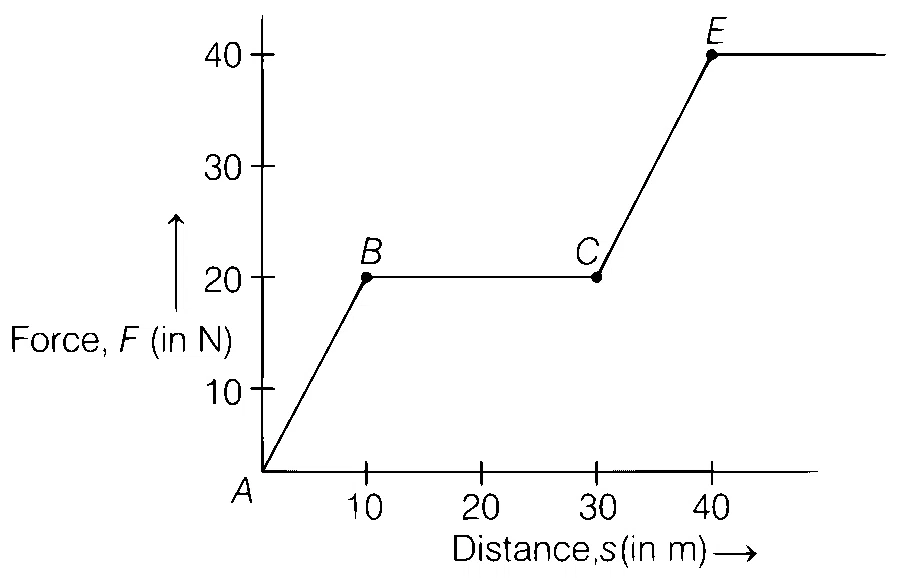
The work done by a force acting on a body is as shown in the following graph. The total work done in covering an initial distance of 40 m is