1AP EAPCET 2022 - 4th July Evening Shift
MCQ+1 / -02022Chemistry
The maximum number of electrons present in an orbital with

AP EAPCET · 4 Jul 2022 · Answers and step-by-step solutions
PDF and print include all subjects in this paper.
Showing 25 of 40 Chemistry questions · Page 1 of 2
The maximum number of electrons present in an orbital with
Which quantum number provides information about the shape of an orbital?
Which of the following vitamins cannot be stored in the body?
Pernicious anemia is caused due to deficiency of which vitamin ?
An aryl carboxylic acid on treatment with sodium hydrogen carbonate liberates a gaseous molecule. Identify the gas molecule liberated.
The hybridisations of carbon in graphite, diamond and
The set of molecules in which the central atom is not obeying the octet rule is
The formal charges of atoms (1), (2) and (3) in the ion 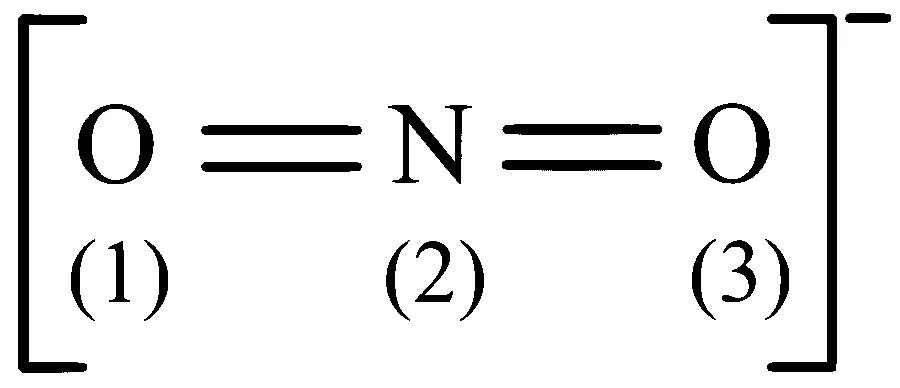 is
The time required for completion of
The crystal field theory is successful in explaining which of the following?
I. Ligands as point charges.
II. Formation and structures of complexes.
III. Colour.
IV. Magnetic properties.
V. Covalent character of metal-ligand bonding.
Assertion (A) Transition metals and their complexes show catalytic activity.
Reason (R) The activation energy of a reaction is lowered by the catalyst.
38.6 amperes of current is passed for 100 seconds through an aqueous
Identify the ortho and para-directing groups towards aromatic electrophilic substitution reactions from the following list
Finkelstein reaction is used for the synthesis of
Which among the following will have highest density?
The major product of the following reaction is
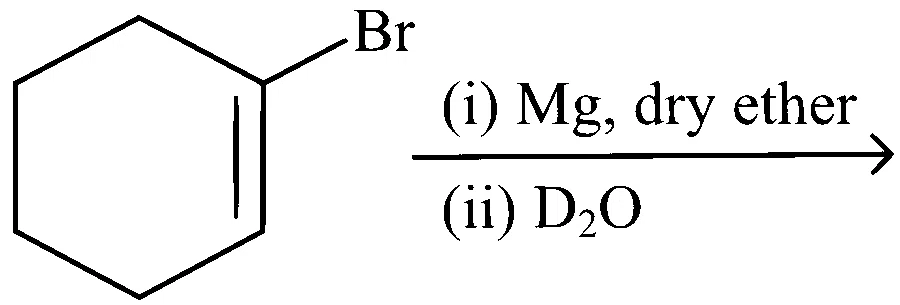
Identify the major product (Y) from the following reaction,

Identify the major product of the following reaction.
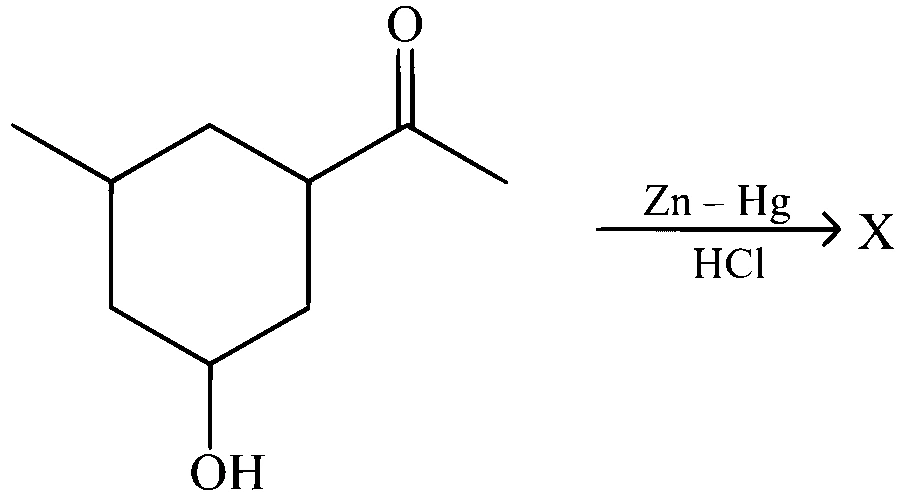
Identify the major product of the following reaction,
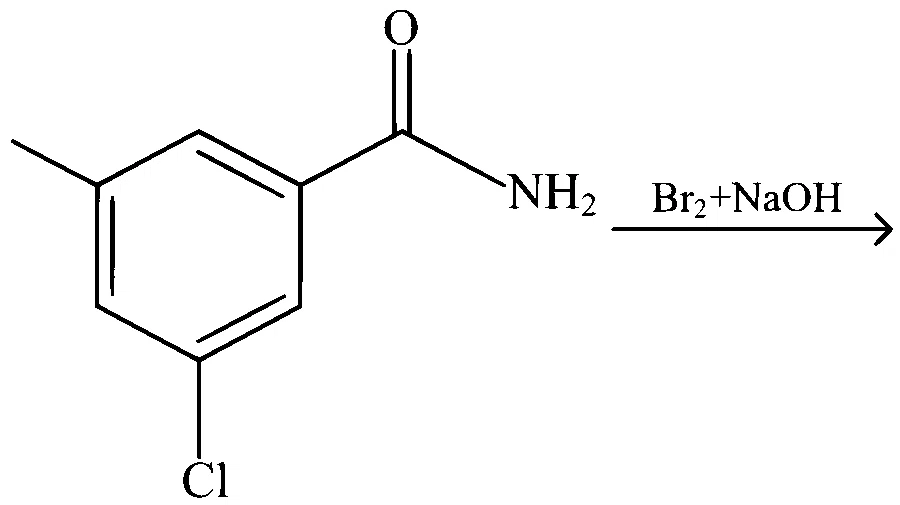
The pH of 0.01 N lime water is
A solution containing 6.0 g of urea is isotonic with a solution containing 10 g of a non-electrolytic solute
Identify the correct statements about the anomalous behaviour of boron.
I. Boron trihalides can form dimeric structures.
II. Boron shows +1 as stable oxidation state.
III. Maximum covalency of boron is four.
IV. Boron does not form
Which of the following is formed when
Among