51AP EAPCET 2022 - 4th July Evening Shift
MCQ+1 / -02022Chemistry
Assertion (A) Transition metals and their complexes show catalytic activity.
Reason (R) The activation energy of a reaction is lowered by the catalyst.

AP EAPCET · 4 Jul 2022 · Answers and step-by-step solutions
Showing 25 of 160 questions · Page 3 of 7
Assertion (A) Transition metals and their complexes show catalytic activity.
Reason (R) The activation energy of a reaction is lowered by the catalyst.
38.6 amperes of current is passed for 100 seconds through an aqueous
Identify the ortho and para-directing groups towards aromatic electrophilic substitution reactions from the following list
Finkelstein reaction is used for the synthesis of
Which among the following will have highest density?
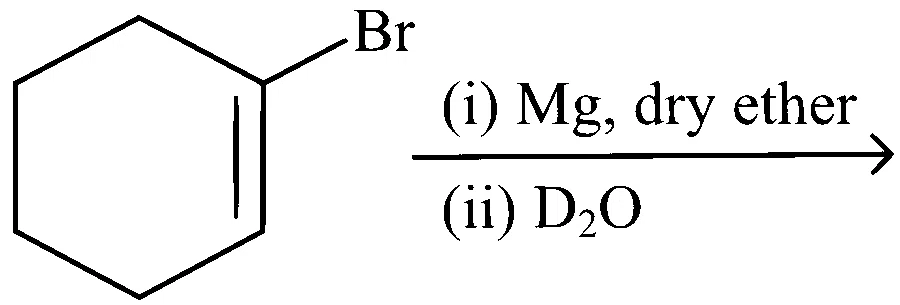
The major product of the following reaction is
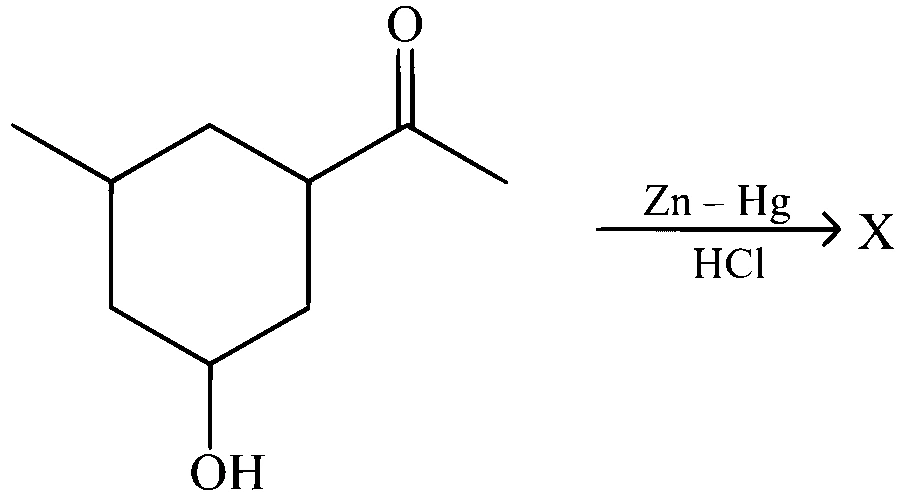
Identify the major product (Y) from the following reaction,

Identify the major product of the following reaction.
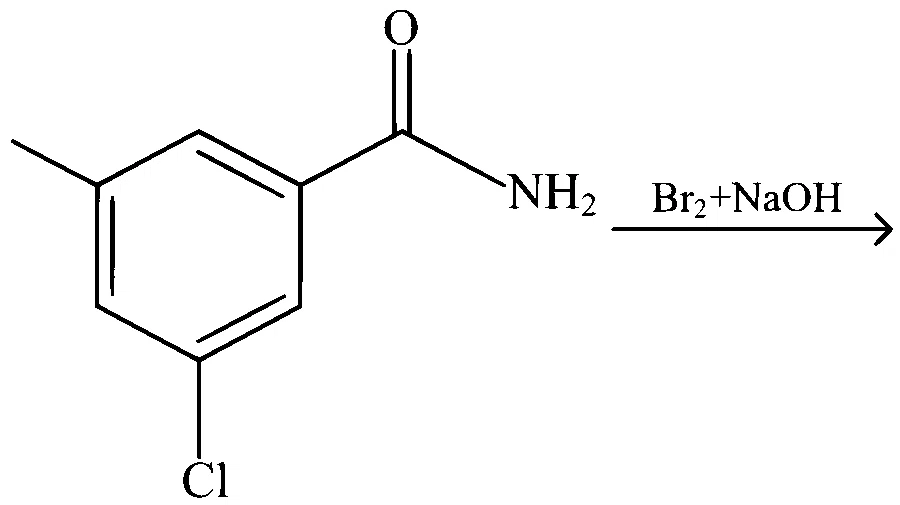
Identify the major product of the following reaction,
The pH of 0.01 N lime water is
A solution containing 6.0 g of urea is isotonic with a solution containing 10 g of a non-electrolytic solute
Identify the correct statements about the anomalous behaviour of boron.
I. Boron trihalides can form dimeric structures.
II. Boron shows +1 as stable oxidation state.
III. Maximum covalency of boron is four.
IV. Boron does not form
Which of the following is formed when
Among
In second period of the long form of the periodic table an element
In which of the following, elements are arranged in the correct order of their electron gain enthalpies?
How many grams of Mg is required to completely reduce
In the reaction of phosphorus with conc.
What is the oxidation state of S in the sulphur containing product of the following reaction?
The pair of elements that form both oxides and nitrides, when burnt in air are
Which of the following solids is not a molecular solid?
Match List I with List II.
| List - I (Defects) | List - II (Examples) | ||
|---|---|---|---|
| (A) | Frenkel defects | (I) | FeO |
| (B) | Schottkey defects | (II) | NaCl |
| (C) | Vacancy defects | (III) | AgCl |
| (D) | Metal deficiency defects | (IV) | Crystals with vacant lattice sites. |
The empirical formula of calgon is
Assertion (A) Animal skins are colloidal in nature.
Reason (R) Animal skin has positively charged particles.