26TS EAMCET 2020 (Online) 14th September Evening Shift
MCQ+1 / -02020Physics
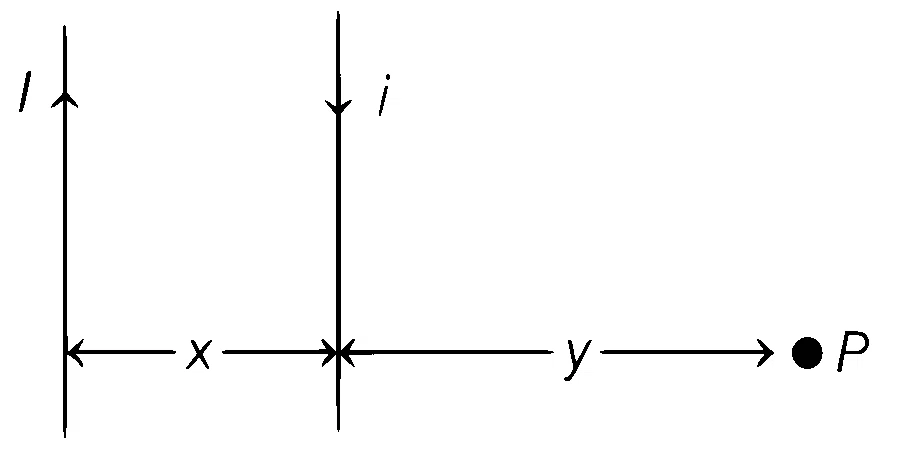
Two infinite wires carrying opposite electrical currents

TS EAMCET · 14 Sept 2020 · Answers and step-by-step solutions
Showing 25 of 160 questions · Page 2 of 7
Two infinite wires carrying opposite electrical currents
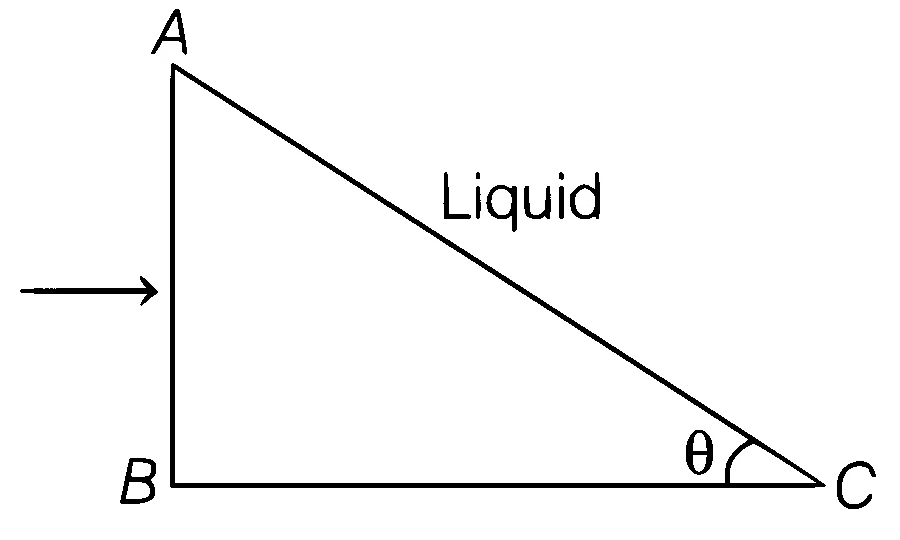
Consider a glass prism immersed in a liquid as shown below. The refractive index of glass and liquid is 1.5 and 1.2, respectively. A ray of light enters the prism perpendicular to the face
A short straight object of length
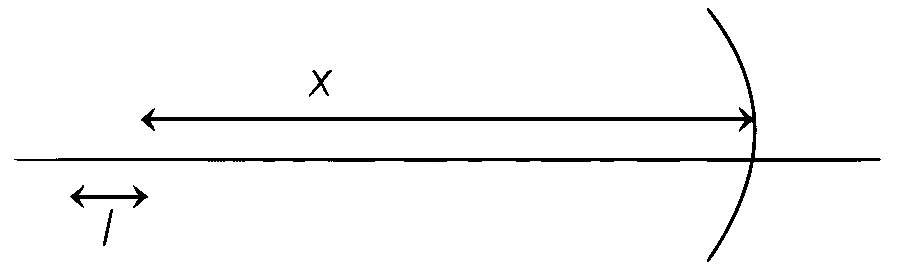
A straight rod of length
Consider a uniform horizontal solid cylinder of mass 10 kg such that its length is 9 times its radius. Let the radius be 40 cm . Calculate the moment of inertia of the cylinder about a line passing through its edge and perpendicular to its axis.
In an
Which of the following circuits satisfies the logic condition
A particle is executing simple harmonic motion in one-dimension. If the amplitude of oscillations is 0.2 cm and if its velocity at the mean position is
A body is oscillating in simple harmonic motion according to the equation
In an experiment the angles are required to be measured using an instrument in which 29 divisions of the main scale exactly coincide with the 30 divisions of the vernier scale. If the smallest division of the main scale is half a degree
If
Let
If in a Young's double slit experiment the slit separation is doubled and the distance of the screen from the slits is reduced to half, then the fringe widths become how many times their original value?
Identify the incorrect statement.
A force acts on a 30 g particle in such a way that the position of the particle as a function of time is given by
Reactions that produce
I.
II.
III.
IV.
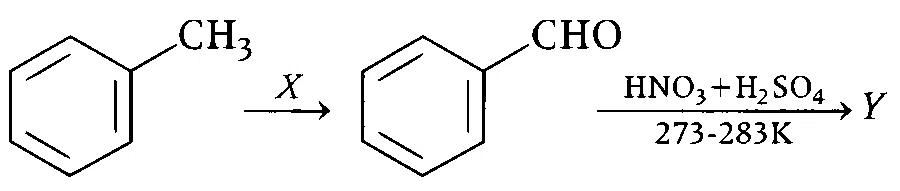
An organic compound, '
Given the ratio of kinetic energy of electron in two orbitals is
Which of the following results is not true about photoelectric effect?
(i) It doesn't give Schiff's test.
(ii) It is found to exist in two different crystalline forms.
(iii) It oxidises with nitric acid to give saccharic acid.
(iv) Pentaacetate of glucose doesn't react with hydroxylamine.
What is the correct order of bond lengths in the following molecules?
I.
II.
III.
IV.
Which one of the following compound is hypervalent?
For a given reaction,