26JEE Main 2023 (Online) 29th January Morning Shift
INTEGER+4 / -12023Physics
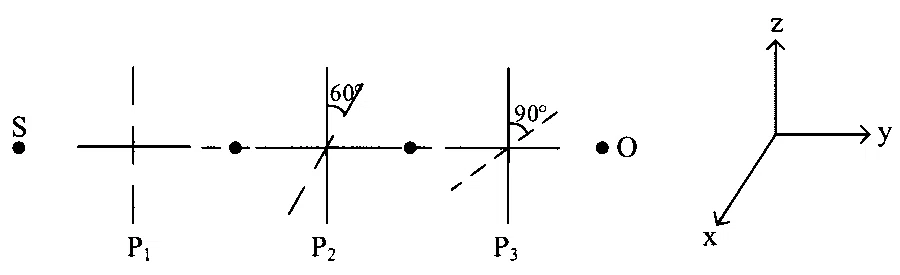
As shown in the figure, three identical polaroids P

JEE Main · 29 Jan 2023 · Answers and step-by-step solutions
Showing 25 of 90 questions · Page 2 of 4
As shown in the figure, three identical polaroids P
A person observes two moving trains, 'A' reaching the station and 'B' leaving the station with equal speed of
Two simple harmonic waves having equal amplitudes of 8 cm and equal frequency of 10 Hz are moving along the same direction. The resultant amplitude is also 8 cm. The phase difference between the individual waves is _________ degree.
A stone is projected at angle
A 0.4 kg mass takes 8s to reach ground when dropped from a certain height 'P' above surface of earth. The loss of potential energy in the last second of fall is __________ J.
(Take g = 10 m/s
The increasing order of
(A) 2, 4 - Dinitrophenol
(B) 4 - Nitrophenol
(C) 2, 4, 5 - Trimethylphenol
(D) Phenol
(E) 3-Chlorophenol
Choose the correct answer from the option given below :
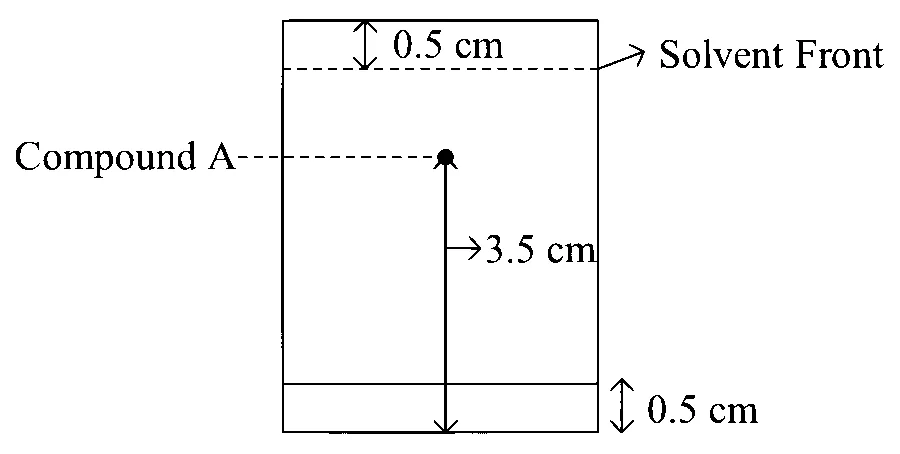
Following chromatogram was developed by adsorption of compound 'A' on a 6 cm TLC glass plate. Retardation factor of the compound 'A' is _________
Number of cyclic tripeptides formed with 2 amino acids A and B is :
The magnetic behaviour of
The bond dissociation energy is highest for
The number of molecules or ions from the following, which do not have odd number of electrons are _________.
(A) NO
(B) ICl
(C) BrF
(D) ClO
(E) NO
(F) NO
Water decomposes at 2300 K
The percent of water decomposing at 2300 K and 1 bar is ___________ (Nearest integer).
Equilibrium constant for the reaction is
Consider the following reaction approaching equilibrium at 27
The standard Gibb's energy change
(Given :
For certain chemical reaction
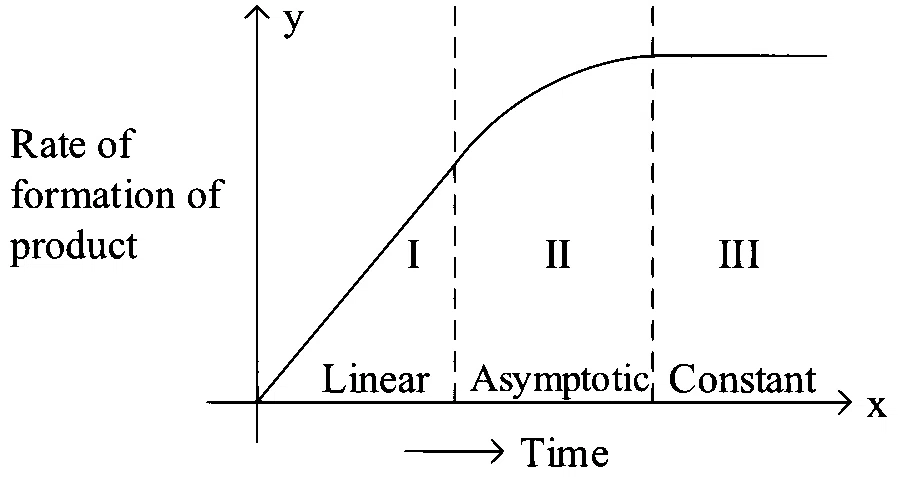
(A) Over all order of this reaction is one.
(B) Order of this reaction can't be determined.
(C) In region I and III, the reaction is of first and zero order respectively.
(D) In region-II, the reaction is of first order.
(E) In region-II, the order of reaction is in the range of 0.1 to 0.9.
Match List I with List II.
| List I | List II | ||
|---|---|---|---|
| Antimicrobials | Names | ||
| (A) | Narrow Spectrum Antibiotic | (I) | Furacin |
| (B) | Antiseptic | (II) | Sulphur dioxide |
| (C) | Disinfectants | (III) | Penicillin G |
| (D) | Broad spectrum antibiotic | (IV) | Chloramphenicol |
Choose the correct answer from the options given below :
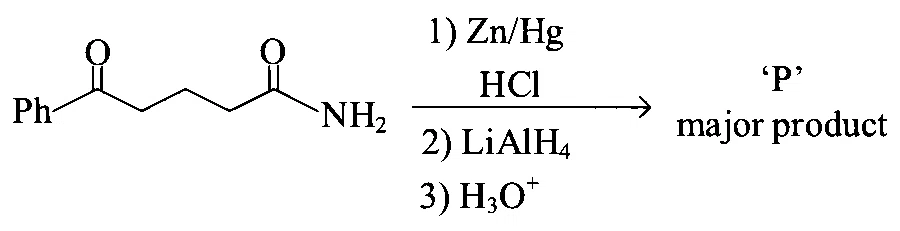
The major product 'P' for the following sequence of reactions is :
Match List I with List II
| List I | List II | ||
|---|---|---|---|
| Reaction | Reagents | ||
| (A) | Hoffmann Degradation | (I) | |
| (B) | Clemenson reduction | (II) | |
| (C) | Cannizaro reaction | (III) | |
| (D) | Reimer-Tiemann Reaction | (IV) |
Choose the correct answer from the options given below :
Chiral complex from the following is :
Here en = ethylene diamine
The sum of bridging carbonyls in
The standard electrode potential
Following figure shows dependence of molar conductance of two electrolytes on concentration.
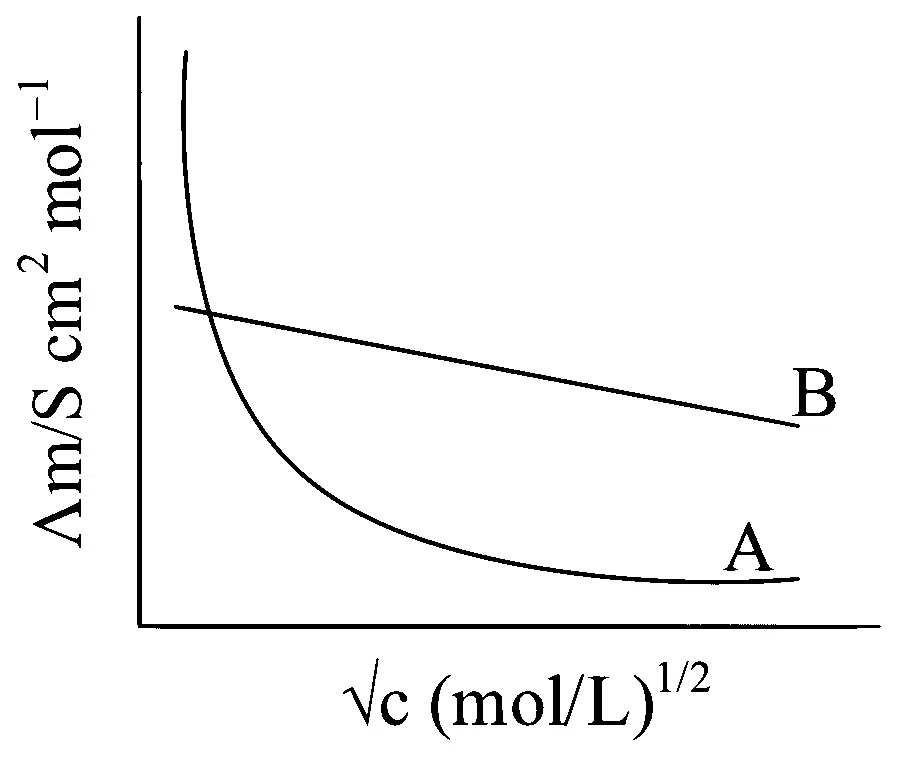
The number of
(A)
(B) For electrolyte B,
(C) At infinite dilution, the value of degree of dissociation approaches zero for electrolyte B.
(D)
Correct statement about smog is :
For 1 mol of gas, the plot of pV vs. p is shown below. p is the pressure and V is the volume of the gas
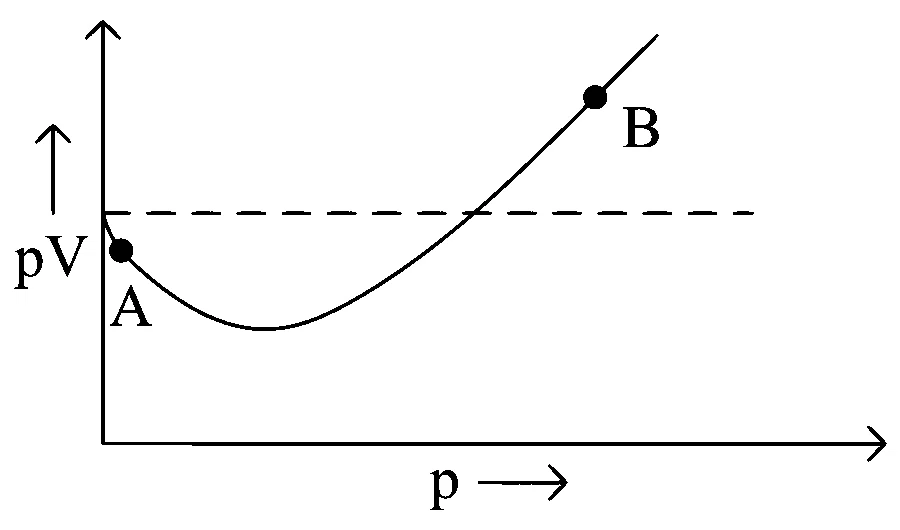
What is the value of compressibility factor at point A ?
Identify the correct order for the given property for following compounds.
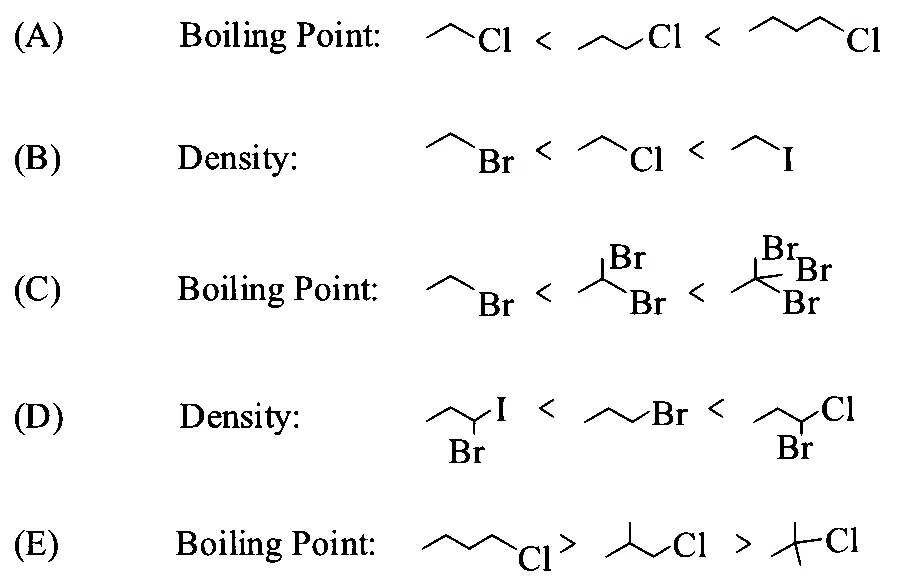
Choose the correct answer from the option given below :
17 mg of a hydrocarbon (M.F.

The number of double bond/s present in the hydrocarbon is ___________.