PracBee
Back

IIT-JEE 2010 Paper 1 Offline Question Paper

JEE Advanced · 11 Apr 2010 · Answers and step-by-step solutions

Paper PDF and print

Showing 25 of 84 questions · Page 2 of 4

26IIT-JEE 2010 Paper 1 Offline
MCQM+4 / -12010Physics
A student uses a simple pendulum of exactly 1m length to determine g, the acceleration due to gravity. He
uses a stop watch with the least count of 1 sec for this and records 40 seconds for 20 oscillations. For this
observation, which of the following statement(s) is (are) true?
27IIT-JEE 2010 Paper 1 Offline
INTEGER+3 / -02010Physics

A stationary source is emitting sound at a fixed frequency f0, which is reflected by two cars approaching the source. The difference between the frequencies of sound reflected from the cars is 1.2% of f0. What is the difference in the speeds of the cars (in km per hour) to the nearest integer? The cars are moving at constant speeds much smaller than the speed of sound which is 330 ms−1.

28IIT-JEE 2010 Paper 1 Offline
INTEGER+3 / -02010Physics

When two progressive waves y1=4sin⁡(2x−6t) and y2=3sin⁡(2x−6t−π2) are superimposed, the amplitude of the resultant wave is __________.

29IIT-JEE 2010 Paper 1 Offline
MCQ+3 / -12010Chemistry

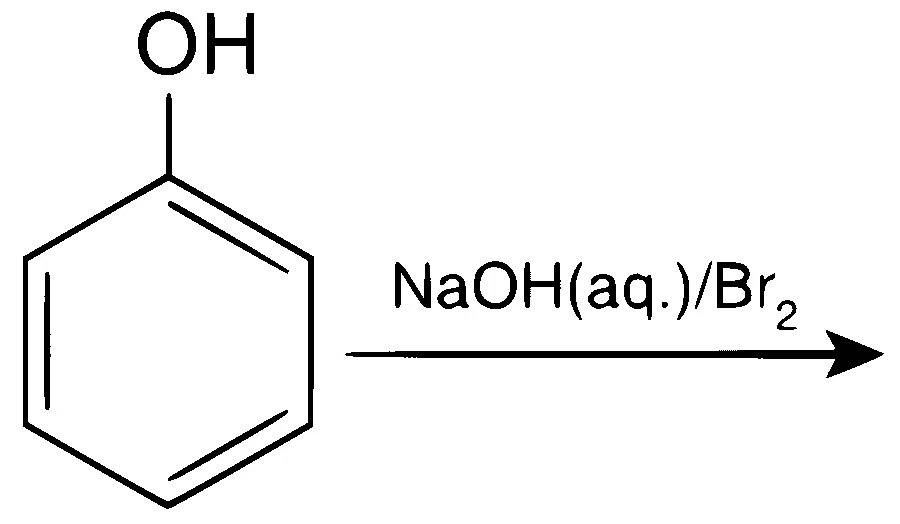
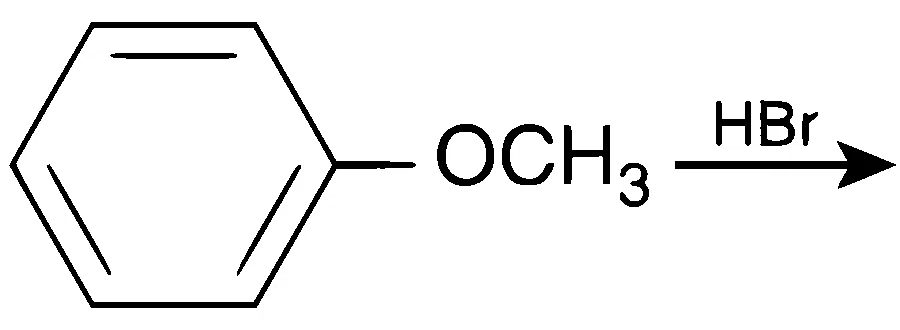
In the reaction


IIT-JEE 2010 Paper 1 Offline Chemistry - Alcohols, Phenols and Ethers Question 18 English


the products are :

30IIT-JEE 2010 Paper 1 Offline
MCQM+4 / -22010Chemistry

In the reaction


IIT-JEE 2010 Paper 1 Offline Chemistry - Alcohols, Phenols and Ethers Question 17 English


The intermediate(s) is(are)

31IIT-JEE 2010 Paper 1 Offline
INTEGER+3 / -02010Chemistry

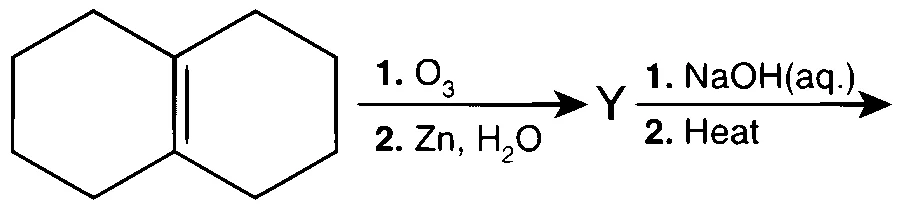
In the scheme given below, the total number of intra molecular aldol condensation products formed from Y is ____________.


IIT-JEE 2010 Paper 1 Offline Chemistry - Aldehydes, Ketones and Carboxylic Acids Question 34 English

32IIT-JEE 2010 Paper 1 Offline
INTEGER+3 / -02010Chemistry

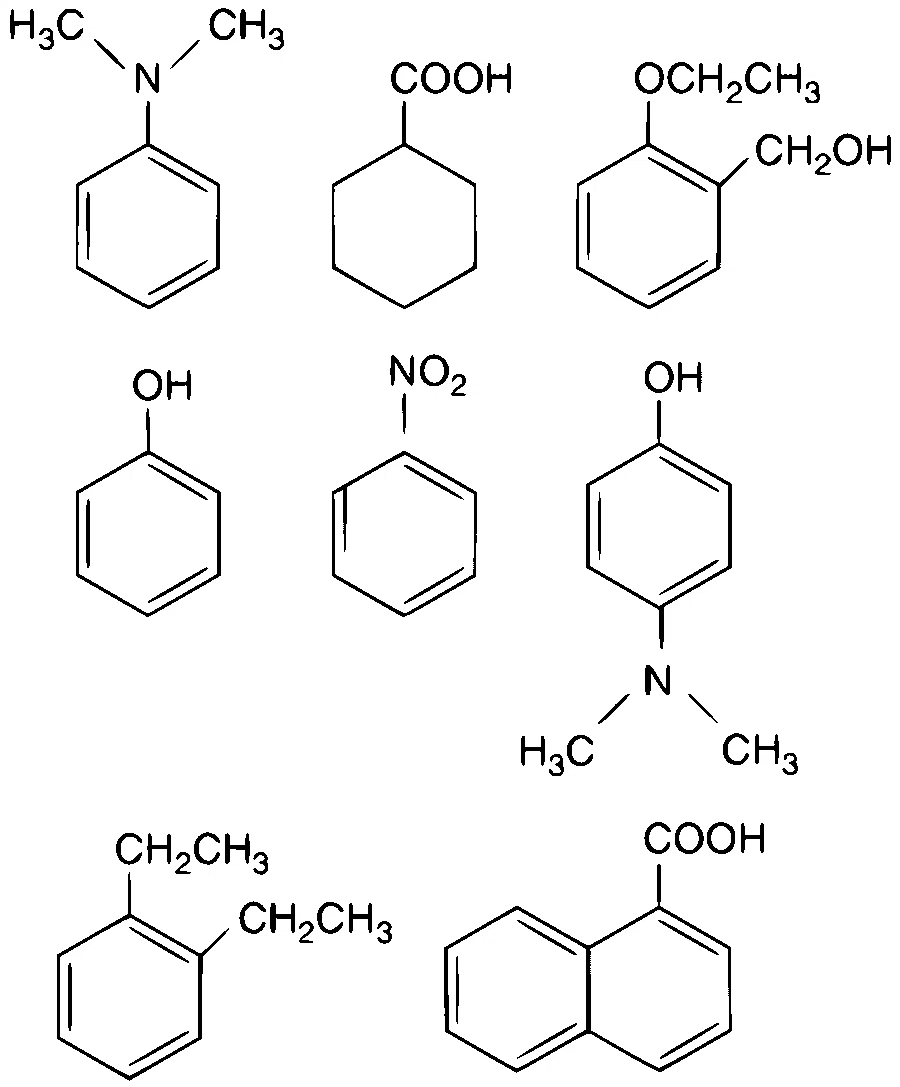
Amongst the following, the total number of compounds soluble in aqueous NaOH is _________.


IIT-JEE 2010 Paper 1 Offline Chemistry - Aldehydes, Ketones and Carboxylic Acids Question 33 English

33IIT-JEE 2010 Paper 1 Offline
MCQM+4 / -22010Chemistry

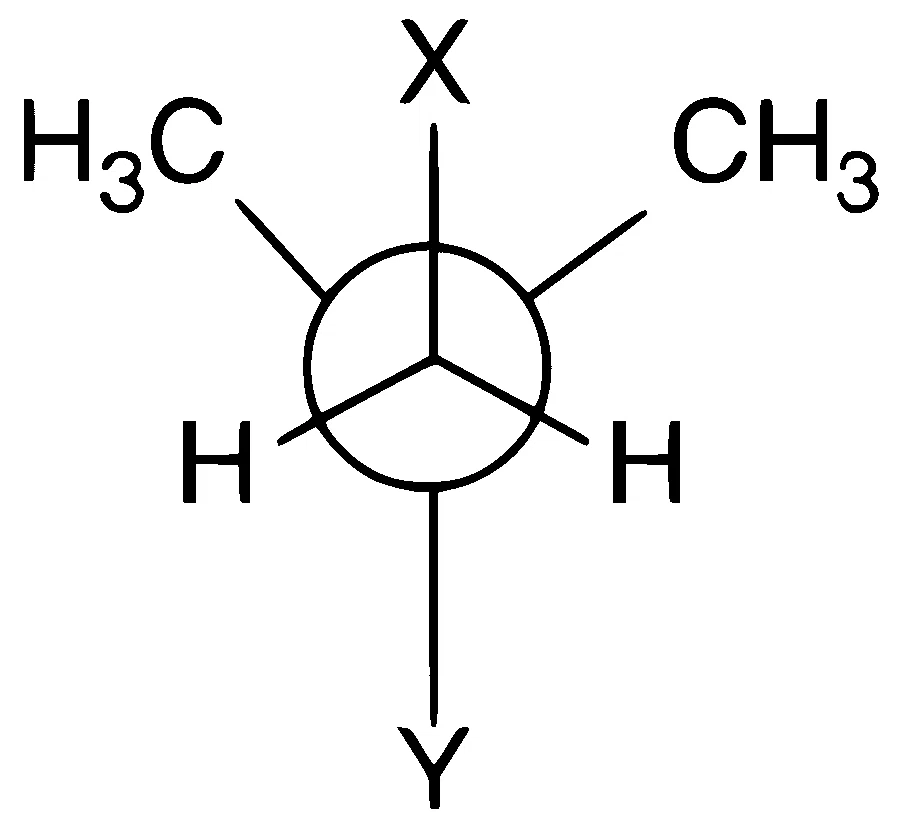
In the Newman projection for 2,2-dimethylbutane, X and Y can, respectively, be


IIT-JEE 2010 Paper 1 Offline Chemistry - Basics of Organic Chemistry Question 15 English

34IIT-JEE 2010 Paper 1 Offline
INTEGER+3 / -02010Chemistry
The total number of cyclic isomers possible for a hydrocarbon with the molecular formula C4H6 is
35IIT-JEE 2010 Paper 1 Offline
MCQ+3 / -12010Chemistry

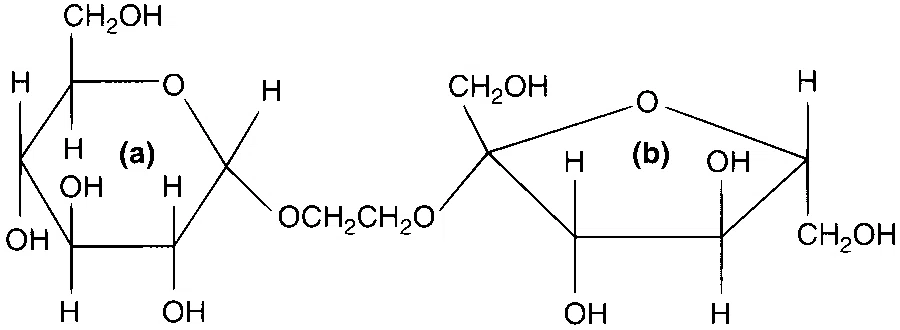
The correct statement about the following disaccharide is :


IIT-JEE 2010 Paper 1 Offline Chemistry - Biomolecules Question 11 English

36IIT-JEE 2010 Paper 1 Offline
INTEGER+3 / -02010Chemistry

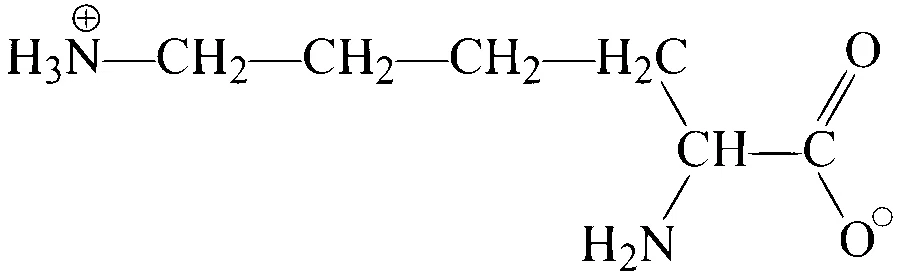
The total number of basic groups in the following form of lysine is


IIT-JEE 2010 Paper 1 Offline Chemistry - Biomolecules Question 10 English

37IIT-JEE 2010 Paper 1 Offline
INTEGER+4 / -02010Chemistry
Based on VSEPR theory, the number of 90 degree F-Br-F angles in BrF5 is
38IIT-JEE 2010 Paper 1 Offline
MCQ+3 / -12010Chemistry

Plots showing the variation of the rate constant (k) with temperature (T) are given below. The point that follows Arrhenius equation is

39IIT-JEE 2010 Paper 1 Offline
INTEGER+3 / -02010Chemistry
The concentration of R in the reaction R → P was measured as a function of time and the following data is obtained
[R] molar1.00.750.400.10
t (min.)0.00.050.120.18

The order of reaction is
40IIT-JEE 2010 Paper 1 Offline
INTEGER+3 / -02010Chemistry
The number of neutrons emitted when 92235U undergoes controlled nuclear fission to 54142Xe and 3890Sr is
41IIT-JEE 2010 Paper 1 Offline
MCQ+3 / -12010Chemistry

The correct structure of ethylenediaminetetraacetic acid (EDTA) is

42IIT-JEE 2010 Paper 1 Offline
MCQ+3 / -12010Chemistry

The ionisation isomer of [Cr(H2O)4Cl(NO2)]Cl is

43IIT-JEE 2010 Paper 1 Offline
MCQ+4 / -12010Chemistry
The concentration of potassium ions inside a biological cell is at least twenty times higher than the outside. The resulting potential difference across the cell is important in several processes such as transmission of
nerve impulses and maintaining the ion balance. A simple model for such a concentration cell involving a
metal M is :

M(s) | M+ (aq ; 0.05 molar) || M+ (aq ; 1 molar) | M(s)

For the above electrolytic cell the magnitude of the cell potential | Ecell | = 70 mV.


If the 0.05 molar solution of M+ is replaced by a 0.0025 molar M+ solution, then the magnitude of the cell potential would be :
44IIT-JEE 2010 Paper 1 Offline
MCQ+4 / -12010Chemistry
The concentration of potassium ions inside a biological cell is at least twenty times higher than the outside. The resulting potential difference across the cell is important in several processes such as transmission of
nerve impulses and maintaining the ion balance. A simple model for such a concentration cell involving a
metal M is :

M(s) | M+ (aq ; 0.05 molar) || M+ (aq ; 1 molar) | M(s)

For the above electrolytic cell the magnitude of the cell potential | Ecell | = 70 mV.


For the above cell :
45IIT-JEE 2010 Paper 1 Offline
MCQ+3 / -0.752010Chemistry
The synthesis of 3-octyne is achieved by adding a bromoalkane into a mixture of sodium amide and and alkyne
46IIT-JEE 2010 Paper 1 Offline
MCQM+2 / -0.52010Chemistry
The reagent(s) used for softening the temporary hardness of water is (are)
47IIT-JEE 2010 Paper 1 Offline
MCQM+3 / -0.752010Chemistry
Aqueous solution of HNO3, KOH and CH3COOH and CH3COONa of identical concentrations are provided. The pairs of solutions which form a buffer upon mixing is(are)
48IIT-JEE 2010 Paper 1 Offline
INTEGER+2 / -02010Chemistry
Amongst the following the total number of compounds whose aqueous solution turns red litmus paper blue is

KCN, K2SO4, (NH4)2C2O4, NaCl, Zn(NO3)2, FeCl3, K2CO3, NH4NO3 and LiCN
49IIT-JEE 2010 Paper 1 Offline
MCQ+3 / -12010Chemistry

Copper is the most noble of the first row transition metals and occurs in small deposits in several countries. Ores of copper inculcated chalcanthite (CuSO4 . 5H2O), atacamite (Cu2Cl(OH)3), cuprite (Cu2O), copper glance (Cu2S) and malacite (Cu2(OH)2CO3). However, 80% of the world copper production comes from the ore of chalcopyrite (CuFeS2). The extraction of copper from chalcopynite involves partial roasting, removal of iron and self-reduction.

Partial roasting of chalcopyrite produces

50IIT-JEE 2010 Paper 1 Offline
MCQ+3 / -12010Chemistry

Copper is the most noble of the first row transition metals and occurs in small deposits in several countries. Ores of copper inculcated chalcanthite (CuSO4 . 5H2O), atacamite (Cu2Cl(OH)3), cuprite (Cu2O), copper glance (Cu2S) and malacite (Cu2(OH)2CO3). However, 80% of the world copper production comes from the ore of chalcopyrite (CuFeS2). The extraction of copper from chalcopynite involves partial roasting, removal of iron and self-reduction.

Iron is removed from chalcopyrite as

More 2010 JEE Advanced papers